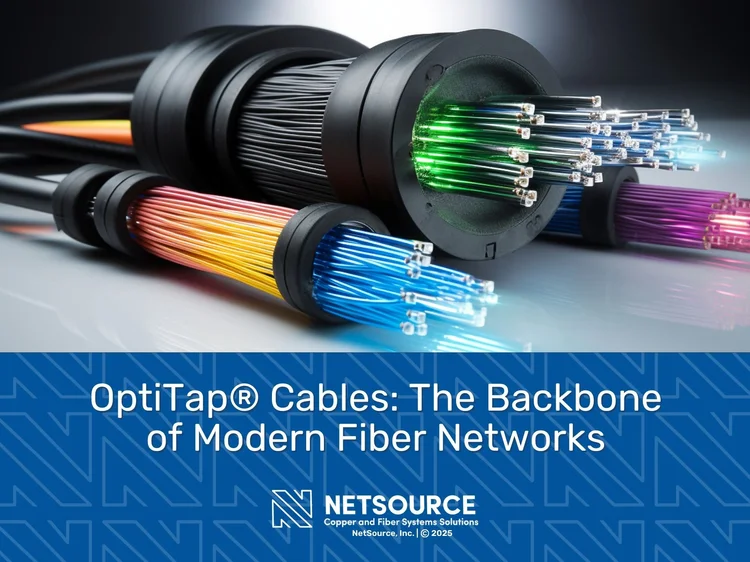
OptiTap® Cables: The Backbone of Modern Fiber Networks
OptiTap® Cables: The Backbone of Modern Fiber Networks Introduction As the demand for high-speed internet and reliable data transmission grows, fiber optic technology has become the preferred solution for broadband networks. OptiTap® cables, specifically designed for Fiber-to-the-Home (FTTH) and Fiber-to-the-Business (FTTB) applications, provide a quick and efficient method for deploying fiber optic connections. These cables, known for their durability and ease of installation, play a critical role in modernizing network infrastructure and expanding broadband accessibility. What Are OptiTap® Cables? OptiTap® cables are fiber optic cable assemblies designed for rapid and secure connections in broadband networks. With over 20 years of proven technology in the field, these cables feature an SC/APC connector encapsulated in a hardened shell, ensuring durability and reliability in harsh environmental conditions. OptiTap® technology streamlines network installations and reduces labor costs while maintaining high-performance fiber optic transmission. Key Features of OptiTap® Cables Versatile Configurations: OptiTap® cables are available in multiple configurations to support various network requirements. OptiTap® to OptiTap® cables directly connect to multiport terminals for seamless plug-and-play functionality. OptiTap® to SC, LC, or PUSHLOCK configurations allow connectivity to standard fiber distribution points. OptiTap® to blunt cables are designed for splicing or field connector termination, providing flexibility for custom installations. Depending on the configuration, these cables will either mate directly with terminals or require splicing for field termination. Weatherproof and Durable: With an IP68 rating, OptiTap® cables are protected against water and dust ingress. They are designed for outdoor applications, making them suitable for aerial, buried, or pedestal-mounted installations. High-Speed Performance: These cables offer low insertion loss and high signal integrity, ensuring seamless data transmission. They are optimized for Gigabit Passive Optical Networks (GPON) and Active Ethernet (AE) applications. Corning-Compatible Technology: NetSource provides Corning-compatible OptiTap® cable assemblies, ensuring seamless integration with existing Corning OptiTap® infrastructure. Applications of OptiTap® Cables Broadband Networks OptiTap® cables are a critical component in broadband infrastructure, enabling Internet Service Providers (ISPs) to expand fiber access for residential subscribers, businesses, and rural communities. Their durable, weather-resistant design ensures long-term reliability in aerial, buried, and pedestal-mounted installations. Rural Broadband Expansion: As part of efforts to bridge the digital divide, ISPs use OptiTap® cables to extend fiber connectivity to underserved rural communities. Their weatherproof construction withstands harsh conditions, ensuring long-term network performance and reduced maintenance costs in remote locations. Fiber-to-the-Building (FTTB): Used in commercial buildings and multi-tenant complexes, OptiTap® cables provide dedicated fiber connections that enhance network stability, bandwidth capacity, and scalability. These cables connect to outdoor distribution points before transitioning to indoor fiber distribution panels or ONTs for service delivery within the building. Fiber-to-the-Curb (FTTC): OptiTap® cables extend fiber to a distribution point near the subscriber’s location, typically in a pedestal, handhole, or small enclosure. From there, fiber is extended to the premises as part of an FTTH transition, ensuring high-speed connectivity. Their environmental durability ensures long-lasting performance while enabling a seamless fiber path to the home. Fiber-to-the-Home (FTTH): OptiTap® cables terminate at a Network Interface Device (NID) on the subscriber’s premises, typically mounted on an exterior wall or placed in a pedestal or handhole. From the NID, fiber enters the building and connects to an Optical Network Terminal (ONT) or indoor fiber distribution panel, ensuring seamless high-speed broadband access. Outdoor and Harsh Environments Designed for use in outdoor enclosures, pedestals, and aerial or buried applications where quick and reliable fiber connections are needed. 5G and Small Cell Deployments Provides high-speed, low-latency fiber connectivity for small cell sites and 5G backhaul, supporting next-generation wireless networks. Utility and Smart Grid Networks Enables secure and durable fiber connections for power utilities, transportation systems, and smart grid applications. Access Networks and Multi-Dwelling Units (MDUs) OptiTap® cables serve as the backbone for connecting MDUs to the broader fiber network. These cables interface with multiport terminals outside the building, providing high-speed connectivity to fiber distribution hubs (FDHs) or patch panels within the MDU. While OptiTap® connectors streamline deployment, indoor-rated fiber patch panels or FDHs are typically used inside the MDU for structured cabling solutions. Multiport terminals allow for easy scalability, enabling seamless future network expansions. Benefits of OptiTap® Cables Faster Deployment Traditional fiber optic installations often involve extensive splicing and labor-intensive processes. OptiTap® cables, when pre-terminated, feature a plug-and-play design that significantly reduces installation time and simplifies network expansion. By minimizing field splicing, these cables help ISPs accelerate broadband deployments while ensuring reliable connectivity. Cost Savings OptiTap® assemblies help reduce overall deployment costs by minimizing labor and equipment expenses associated with traditional fiber installations. Pre-Terminated OptiTap® Assemblies: These plug-and-play solutions eliminate the need for fusion splicing in the field, reducing reliance on expensive splicing equipment and highly skilled technicians. Faster installations translate to lower labor costs, shorter project timelines, and increased service activation rates for ISPs. Stubbed OptiTap® Assemblies: While some deployments require field splicing, OptiTap® cables still reduce material waste and streamline installation compared to fully custom-built fiber runs. Pre-cut lengths and factory-polished connectors reduce on-site errors and rework, leading to cost-effective scalability in broadband rollouts. Reducing equipment costs, labor requirements, and installation time, OptiTap® assemblies offer a more efficient and cost-effective solution for fiber network expansion. Enhanced Reliability Factory-terminated connectors minimize insertion loss and improve network stability. The rugged construction of OptiTap® cables ensures long-term durability. Scalability and Flexibility As broadband demands increase, OptiTap® networks can be easily expanded by adding multiport terminals and additional drop cables. This modularity ensures future-proof network infrastructure. Minimal Maintenance With high resistance to environmental factors, OptiTap® cables require minimal maintenance compared to traditional fiber optic installations. How OptiTap® Cables Improve FTTH and Broadband Networks Simplifying Installations OptiTap® cables provide faster, more efficient fiber deployments by reducing the need for extensive field splicing. Pre-terminated options allow technicians to simply plug in the connectors, eliminating time-consuming splicing and fiber preparation. For configurations requiring splicing, factory-prepared cables reduce errors and simplify on-site termination, ensuring consistent and reliable installations. Enhancing Network Performance Designed for low-loss optical transmission, OptiTap® cables ensure minimal signal degradation over long distances. This makes them ideal for high-bandwidth applications, including video streaming,