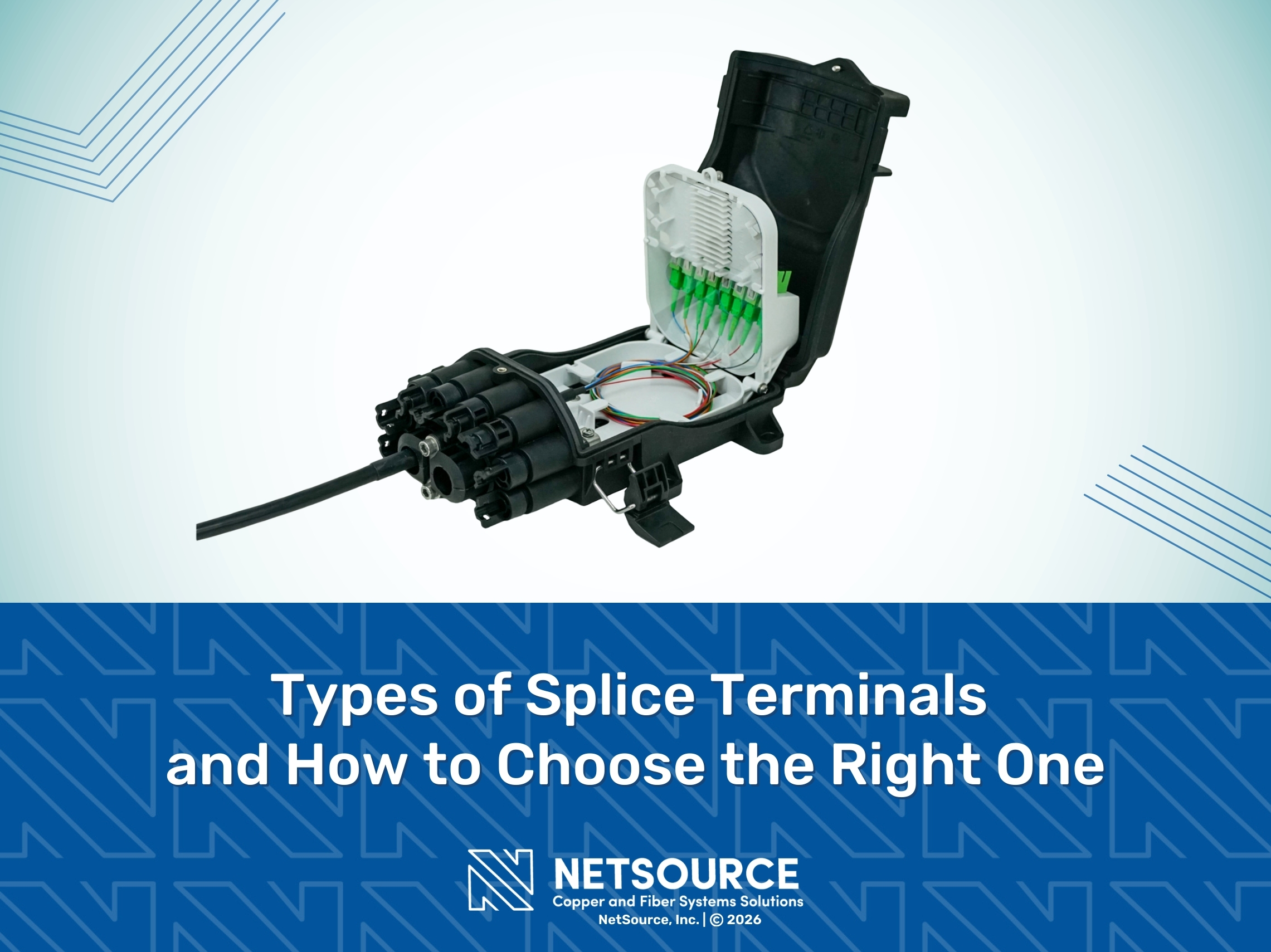
In fiber optic networks, splice terminals are critical components that enable seamless connectivity by serving as junction points for splicing, splitting, and distributing optical fibers. With several types of splice terminals available, each designed for specific applications, selecting the right one can significantly impact network performance and efficiency. This article explores the types of splice terminals offered by NetSource Solutions and provides guidance on choosing the best option for your project.
What Are Splice Terminals?
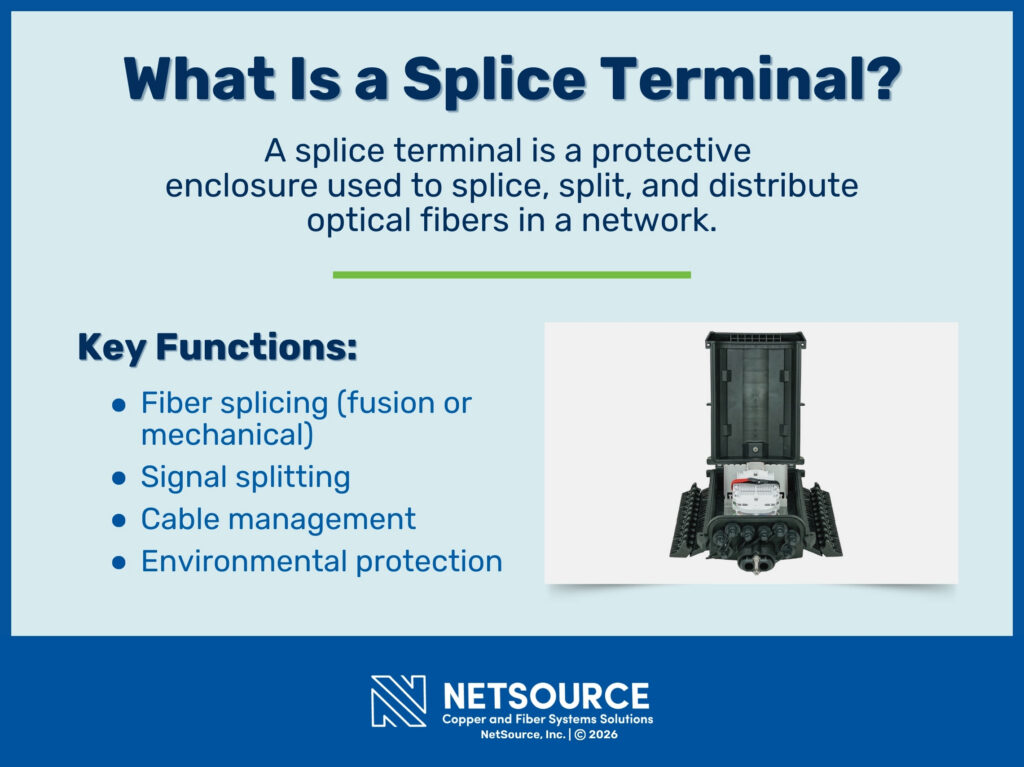
Splice terminals are enclosures or units used to join optical fibers through fusion or mechanical splicing. They often integrate features for splitting, distribution, and cable management, making them essential for both passive optical networks (PON) and active fiber deployments. These terminals protect spliced connections from environmental factors and ensure network reliability.
Types of Splice Terminals
NetSource Solutions offers several types of splice terminals to meet diverse networking needs:
1. OptiTap® Splice Terminals (OST)
- Features:
- IP68-rated for water and dust ingress protection.
- Available with 4, 8, or 12 hardened SC/APC adapters.
- Pre-loaded with splice trays and pigtails.
- Applications:
- Ideal for outdoor installations, such as a strand, pole, pedestal, or ground-vault mounting.
- Suitable for fiber-to-the-home (FTTH) and fiber-to-the-business (FTTB) networks.
- Advantages:
- Provides robust environmental protection.
- Simplifies fiber distribution and splicing in outdoor settings.
2. Single Fiber Splice Terminals (SFST)
- Features:
- Supports up to 16 subscribers.
- Splice capacity of 96 fibers (4 trays x 24 fibers per tray).
- IP68-rated for use in harsh outdoor environments.
- Applications:
- Aerial strand, pole, pedestal, and ground vault installations.
- Designed for dense residential and commercial deployments.
- Advantages:
- Combines splicing, splitting, distribution, and storage.
- Compact design optimized for high-density networks.
3. Stubless Splitter Terminals (SST)
- Features:
- Designed for fiber splitting without terminal splicing.
- Available in configurations with 1×4 or 1×8 splitters.
- Compatible with OptiTap® cables.
- Applications:
- FTTH networks require efficient distribution with minimal splicing.
- Outdoor installations in rural and suburban environments.
- Advantages:
- Reduces installation time by eliminating in-field splicing.
- Cost-effective for extending fiber networks.
How to Choose the Right Splice Terminal
Selecting the right splice terminal depends on several factors, including your network’s scale, location, and specific requirements. Here’s a step-by-step guide to help you make the best choice:
1. Assess the Installation Environment
- For outdoor installations, opt for terminals with high ingress protection ratings (e.g., IP68) to withstand environmental challenges such as water, dust, and temperature fluctuations.
- Consider mounting options such as pole, strand, pedestal, or ground vault to ensure compatibility with the site.
2. Determine Capacity Needs
- Evaluate the number of fibers that need to be spliced or split at each terminal.
- For high-density deployments, choose options such as SFST that offer higher splice capacities.
3. Evaluate Functional Requirements
- If your deployment requires both splicing and splitting, look for terminals that integrate these functions, such as SFST or SST.
- For networks focused on rapid deployment, stubless terminals like SST minimize installation time.
4. Compatibility with Network Architecture
- Ensure the terminal’s design aligns with your network’s architecture, whether it’s a PON, active Ethernet, or hybrid setup.
- Check compatibility with specific cable types and connectors, such as OptiTap®.
5. Prioritize Cost-Effectiveness
- Balance upfront costs with long-term reliability and maintenance requirements.
- Opt for terminals that simplify installation and reduce the need for specialized tools or labor.

Benefits of Using NetSource Splice Terminals
NetSource Solutions’ splice terminals are engineered for durability, efficiency, and adaptability. Here’s what sets them apart:
- U.S.-Based Manufacturing: High-quality products built and tested in the United States.
- Customizable Solutions: Options for tailored configurations to meet specific project needs.
- Rapid Turnaround Times: 24-hour assembly capabilities ensure timely delivery.
- Stringent Quality Standards: All products undergo rigorous testing to guarantee performance and reliability.
Enhance Network Reliability with the Ideal Splice Terminal
Splice terminals are essential for building and maintaining robust fiber optic networks. By understanding the unique features and applications of each type, you can choose the best solution for your specific needs. Whether you require the rugged reliability of OptiTap® Splice Terminals, the high capacity of SFST, or the streamlined efficiency of SST, NetSource Solutions offers the perfect product to support your deployment.Ready to enhance your network? Contact NetSource Solutions today for expert guidance and premium-quality splice terminals tailored to your project.