Selecting the right cable assemblies for harsh environments can be the difference between system failure and long-term reliability. If you’re searching for durable, high-performance cable assemblies that withstand extreme conditions like moisture, heat, chemicals, and mechanical stress, this guide is for you. In this article, we’ll walk you through exactly what to look for in rugged cable assemblies, break down key features, and explain when custom solutions are necessary. Whether you’re in the military, aerospace, telecom, or industrial sector, NetSource is here to help you find the right solution. Based in the USA, we specialize in building custom cable assemblies engineered for performance and longevity. If you’re ready to get started with the right cabling solution for your environment, contact NetSource today.
Understanding Harsh Environments and Cable Assembly Requirements
Cable assemblies for harsh environments must be designed to withstand harsh environmental factors that would quickly degrade or destroy standard cables. These environments often involve exposure to water, dust, oil, chemicals, extreme temperatures, UV radiation, and constant movement or vibration. For example, extreme heat and cold, as defined by the National Weather Service, can significantly affect how cable materials expand and contract and how they perform over time.
In such conditions, ordinary cables can break down, leading to system failures, safety risks, or costly downtime. That’s why choosing the proper cable assembly is essential to ensure performance, durability, and safety. Properly engineered cable assemblies protect internal components and maintain signal integrity, even in the most severe environments.
Key Features To Look for in Cable Assemblies for Harsh Environments
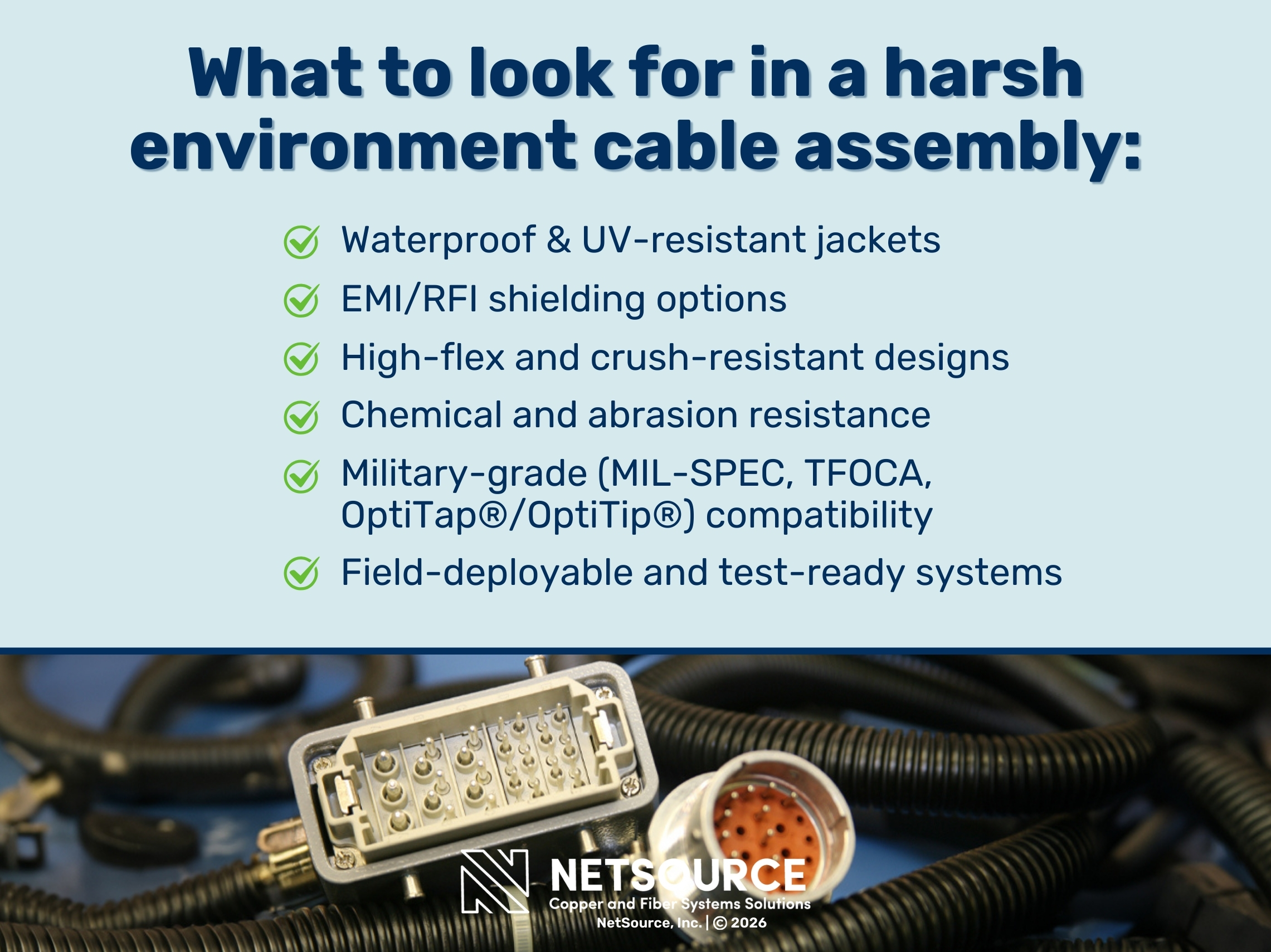
When selecting harsh environment cable assemblies, look for the following features:
- Durable jacketing materials: Materials like TPE, TPU, PVC, and fluoropolymers provide strong protection against environmental stress.
- Shielding for EMI/RFI protection: Options include foil, braid, and drain wire to prevent signal interference.
- High-flex designs: For applications with frequent movement or bending, cables must be built to resist fatigue and breakage.
- Resistances to key elements:
- Water and moisture (waterproof cable assemblies)
- UV exposure from sunlight
- Oil and harsh chemicals
- Abrasion and crushing forces
These features help extend the life and reliability of cable systems in demanding applications.
Tactical and Military-Grade Cable Assemblies
Tactical cable assemblies are built specifically for use in mission-critical applications, including military, aerospace, and field communications. These cables are designed for portability, ruggedness, and quick deployment.
Key characteristics include:
- TFOCA cables: Rugged fiber connectors used in military-grade applications
- MIL-spec compliance: Meets strict U.S. military standards
- Field-replaceable components: Easy to maintain and adapt in challenging environments
- Durability: Resistant to crushing, bending, and harsh weather
Military and aerospace cables are engineered to ensure signal integrity under stress, whether in combat zones or aerospace missions. For more insights, read about our custom cable assemblies for defense or explore our military-grade cable solutions.
Outdoor Fiber Cable Solutions for Harsh Conditions
Fiber optic cables are often used in outdoor and industrial settings, but not all fiber cables are suited for exposure to the elements. Choosing the right outdoor fiber cable solutions involves understanding construction types and protective features.
- Loose tube vs. tight-buffered: Loose tube fiber offers more protection for outdoor use; tight-buffered is easier to install in buildings.
- Water-blocking materials: Gels, dry yarns, and tapes prevent moisture from entering the cable.
- Rodent-resistant and armored options: Protect against physical damage when buried or exposed.
- UV and weather protection: Outer jackets must resist sunlight, rain, and temperature shifts.
Properly chosen outdoor fiber cables help maintain high-speed connectivity in harsh environments. If you’re considering enclosures or additional protection, review our fiber and copper enclosures.
When To Choose Custom Cable Assemblies
Not all applications can be solved with off-the-shelf cables. Custom cable assemblies allow you to match specific technical, environmental, and installation needs.
- Why go custom: Standard cables may lack features required for unique systems or may not fit within space or routing limits.
- Benefits:
- Tailored lengths, connectors, and materials
- Enhanced compatibility and performance
- Reduced installation time and error
- Design process:
- Define system needs and environmental conditions
- Choose components (jacket, shielding, connectors, etc.)
- Prototype and test before full production
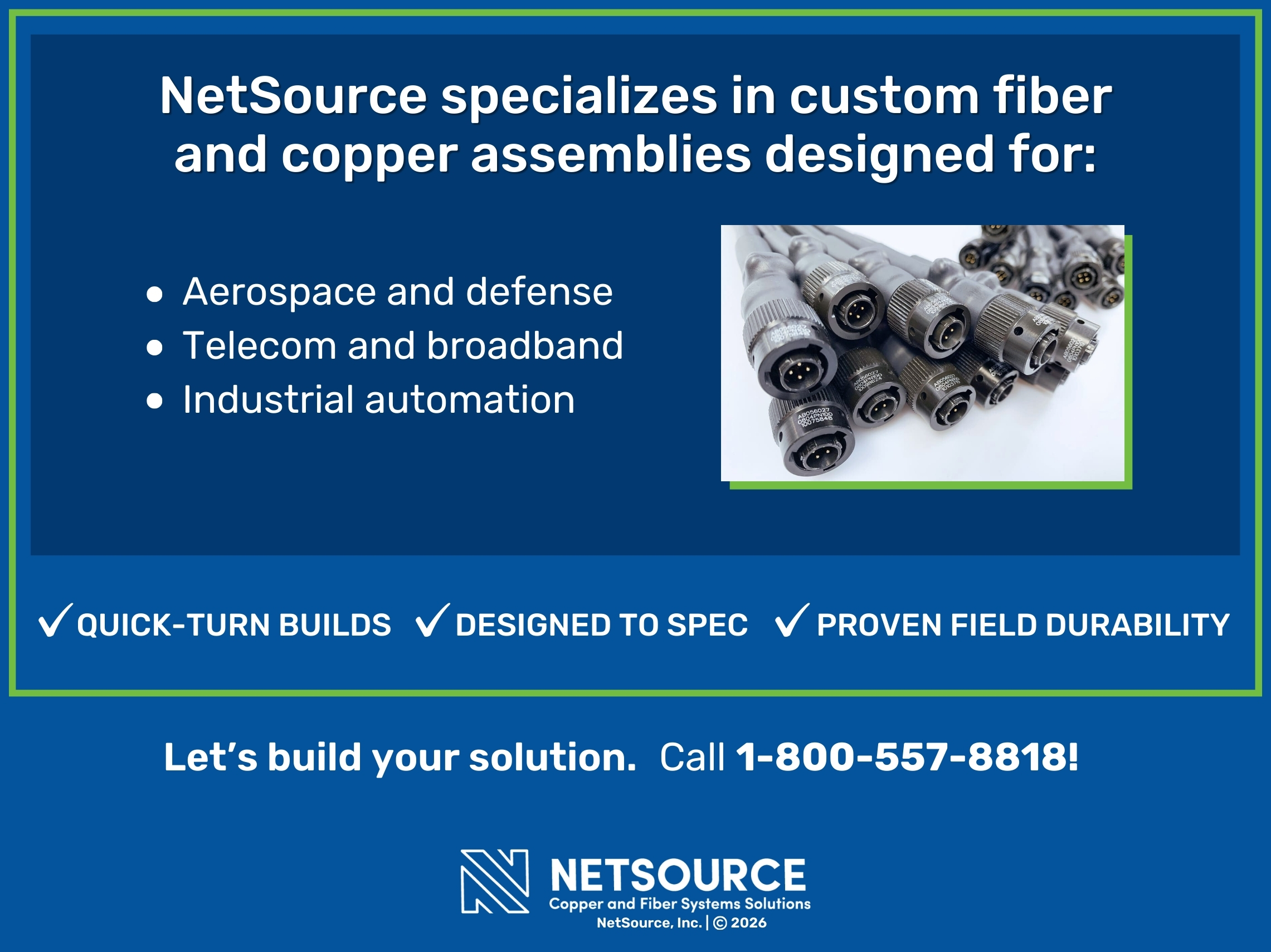
Custom assemblies are ideal for high-stakes or highly specialized projects in fields like aerospace, telecom, and industrial automation. You can explore our custom cable builds to see how NetSource supports specialized environments.
Key Questions To Ask Before Choosing a Cable Assembly
To make the proper selection, start by answering these questions. If you’re looking for durable modular interconnects, check our fiber patch cords and patch panels for harsh environments.
- What environmental hazards will the cable face?
- Will it experience regular movement or stress?
- Is there a need for EMI or RFI shielding?
- Are there size or routing constraints?
- Are compliance standards required (ISO, UL, MIL-STD)?
These questions help narrow down options and avoid common mistakes.
Essential Components Inside Rugged Cable Assemblies
The strength and performance of harsh environment cable assemblies come from their internal components:
- Strength members: Aramid fibers, fiberglass rods, or steel cores add tensile strength.
- Breather tubes: Help release pressure and protect internal wiring.
- Fillers: Maintain shape, add protection, and improve performance.
- Separators/barriers: Prevent components from rubbing or sticking together.
- Outer jackets: Defend against mechanical and chemical threats.
- Waterproofing: Tapes and gels that seal against water ingress.
Each part plays a critical role in building a cable assembly that can last under stress. Learn about field test cords for cable validation that support your installation and QA processes.
Choosing a USA-Based Cable Assembly Manufacturer
Working with a domestic supplier offers several advantages:
- Faster delivery times
- Easier technical support and communication
- Stronger adherence to U.S. quality standards, like ISO 9001:2015
You can also learn more about our wireless-ready rugged cabling and how we support diverse industry environments.
Before choosing a supplier, ask some questions:
- Do they offer prototyping and testing?
- Can they meet compliance needs (e.g., military or aerospace)?
- What’s their experience with harsh environment projects?
For example, if you’re looking for rugged fiber interfaces, our OptiTap®-compatible solutions and OptiTip® cable configurations are engineered for outdoor reliability.
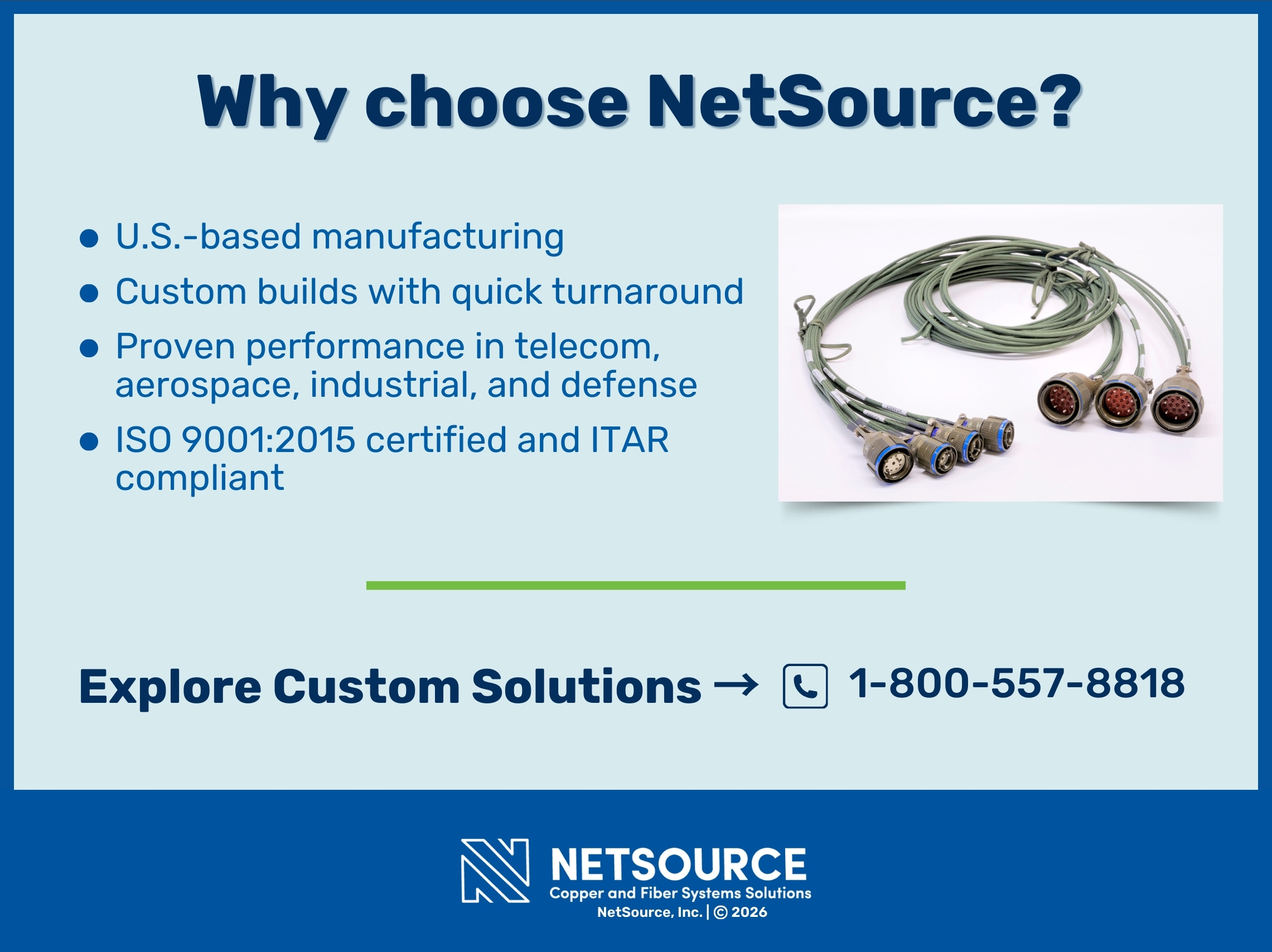
NetSource is a trusted USA-based manufacturer of custom cable assemblies for harsh environments. We offer full-service support from design through delivery.
Summary: Making the Right Decision for Your Cable Assemblies for Harsh Environment
When selecting cable assemblies for harsh environments, it’s crucial to start by understanding the actual conditions to which the cables will be exposed. Factors like moisture, extreme temperatures, constant motion, and chemical exposure should directly influence your selection. Your system’s technical needs also play a critical role, including whether the cable must support high data speeds, resist electrical noise, or fit into a tight installation space. In many cases, choosing between a standard and a custom solution depends on the application’s complexity and specific performance requirements.
For the best results, match the cable design to the environmental stress factors. Ensure it includes the right shielding, jacketing, and internal support to withstand those conditions. When demands are high, such as in military or industrial settings, custom cable assemblies often deliver longer-lasting and more efficient performance.
Working with a qualified U.S. manufacturer also improves quality control and gives you access to design support and compliance expertise. Need expert help selecting cable assemblies for harsh environments in the USA? If you’d like to explore more rugged connectivity insights, check out our blog. You can also view downloads and spec sheets to see our technical capabilities. Contact NetSource to get custom-built solutions made to perform under pressure.