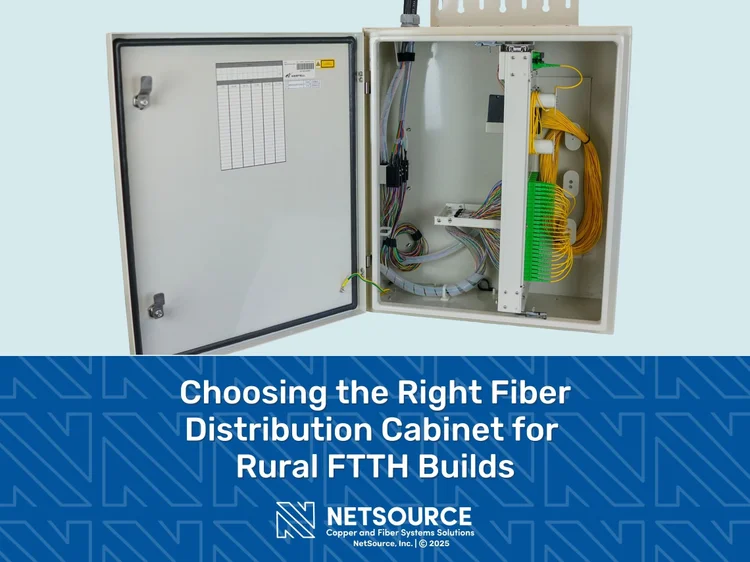
How Fiber Distribution Cabinets Support Scalable Network Infrastructure
Most network infrastructure problems don’t show up on day one. They show up six months later when a team needs to add capacity, trace a connection, isolate a fault, or reroute fiber inside a cabinet that was never designed to scale cleanly in the first place. That’s usually when cable organization stops being an afterthought. In smaller environments, almost any setup can feel manageable early on. But as fiber networks grow, small infrastructure decisions start creating larger operational problems. Cabinets become overcrowded. Routing gets inconsistent. Maintenance takes longer than expected. Expanding the system becomes harder than it should be. This is one reason fiber distribution cabinets play such an important role in structured cabling systems today, especially in broadband infrastructure and high-density fiber networks where uptime and scalability matter. To ensure your infrastructure can accommodate future growth and expansion, contact NetSource today to take advantage of our technical expertise and tailored guidance every step of the way. Why Fiber Organization Starts Breaking Down As networks expand, the physical side of infrastructure becomes more difficult to manage. More fiber means: More routing paths More connection points More troubleshooting complexity More opportunities for service disruption during maintenance Over time, systems built for current demand struggle to accommodate future growth. Teams start working around the infrastructure instead of through it. That usually creates problems nobody notices immediately: Difficult cable tracing Inconsistent labeling Congested pathways Accidental disconnects during service work Individually, these issues seem minor. Together, they slow everything down. Where Fiber Distribution Cabinets Become Important Fiber distribution cabinets create a centralized location for organizing and protecting fiber connections across the network. That sounds simple, but the operational impact becomes much more obvious in larger environments. When cabinets are designed well, technicians can: Identify connections faster Isolate issues more efficiently Make changes with less disruption Expand the system without rebuilding existing pathways Poor organization has the opposite effect. Even basic maintenance becomes more time-consuming once cable and connection density increase. This is especially true in environments supporting broadband infrastructure, multi-building deployments, and large-scale fiber expansion projects. High-Density Changes the Equation The larger the deployment, the smaller the margin for error tends to become. In high-density fiber networks, physical space disappears quickly. Routing paths become more congested. Access becomes more limited. Something as simple as tracing or replacing a connection can become unnecessarily disruptive if the infrastructure wasn’t planned carefully from the beginning. This is where fiber cable management starts to affect more than just appearance. Good organization helps reduce: Cable strain Routing confusion Service interruptions during maintenance Expansion difficulties later on The goal is not to create a perfect-looking cabinet. The goal is to create infrastructure that remains manageable as the environment changes. Indoor and Outdoor Environments Create Different Challenges Not every deployment faces the same conditions. An outdoor fiber distribution box may need to handle moisture, temperature shifts, debris, and physical exposure. In those environments, protection and durability become major considerations. Indoor environments usually create different pressures and require durable indoor enclosures. Data centers and telecommunications rooms tend to prioritize accessibility, density, airflow, and serviceability instead. The infrastructure decisions that work well in one environment do not always translate cleanly into another. That’s one reason early planning matters. Once systems begin expanding, changing physical layouts becomes significantly more disruptive. Planning for Expansion Before It Becomes Urgent Many infrastructure problems start with reasonable assumptions. A system is built around current demand; everything works, and expansion is treated as something to figure out later. Then more fiber runs get added, equipment changes, cabinets fill up faster than expected, and routine maintenance becomes harder than anybody anticipated. At that point, even simple changes can take longer than they should. This is where planning and organization matter. Well-designed fiber distribution panels and cabinet layouts make it easier to add capacity, reroute connections, and work within the system without causing unnecessary disruption. NetSource offers many patch panel options that remain essential to planning ahead for modern network expansions. Final Thoughts As networks grow, physical infrastructure tends to become either an asset or a recurring source of friction. Fiber distribution cabinets help keep systems organized, accessible, and easier to expand over time. That becomes increasingly important in structured cabling systems where density, uptime, and long-term serviceability all matter. For teams planning upgrades or evaluating existing fiber infrastructure, it’s worth paying attention to how manageable the environment will be in a few years—not just whether it works today. NetSource works with organizations across the USA to support fiber infrastructure planning, cable management, and scalable deployment strategies for evolving network environments. Whether you are planning to build a new network infrastructure or looking for options to upgrade an existing one, NetSource is dedicated to understanding your unique goals. Call NetSource or contact us online to schedule a time to discuss your project requirements with a member of our team. You can also visit us in person at one of our events throughout 2026.