Structured cabling

Futuristic data center corridor lined with server racks. Article title.
Data Center Cables, AI Power, Custom Data Cables, Modular data center design, Structured cabling

Upgrading Data Center Cabling for AI Power in the USA

Data center cabling in the USA is evolving as AI reshapes facility design and performance demands. NetSource supports mission-critical environments where higher power density, faster data movement, and automation require smarter structured cabling systems and better planning. This article outlines how modular data center design and advanced data center cable management solutions are shaping the future of data center cabling across the USA. If you are planning AI expansion, connect with NetSource to ensure your infrastructure is built for long-term growth. Why AI Is Changing Data Center Cabling in the USA AI workloads require high-speed, low-latency connections. GPU clusters drive heavy east-west traffic, increasing pressure on data center cabling. AI-ready racks may use hybrid fiber and power cable solutions to streamline routing. Structured cabling systems must handle higher bandwidth and port density. Many AI environments rely on pre-terminated solutions such as multifiber trunks for faster deployment and reduced signal loss. Poor design can still limit GPU performance. Cable layout affects airflow and heat. As AI adoption grows across the USA, well-planned data center cabling directly supports performance and uptime. AFCOM notes rising rack density is reshaping infrastructure priorities.   How Structured Cabling Systems Support AI Workloads Structured cabling systems organize connections between servers, storage, and network devices. In AI-ready facilities, this directly impacts scalability, uptime, and long-term performance of data center cabling in the USA. Well-planned, structured cabling systems provide: Standardized layouts for easier scaling and rack expansion Faster upgrades with reduced downtime Support for future speeds such as 800G and beyond, often using MTP® Cable Assemblies for scalable fiber connectivity Clear labeling and documentation for quicker troubleshooting Compliance with TIA and ANSI standards across the USA Proper termination using fiber adapter panels to ensure clean connectivity and easier maintenance Built to recognized standards, structured cabling systems create a reliable foundation for AI environments. NetSource delivers these data center cabling solutions across the USA, backed by proven expertise and compliant design practices. The Role of Modular Data Center Design in Modern Data Center Cabling Modular data center design enables fast expansion through pre-configured modules that scale with demand. Modular data center design often incorporates scalable indoor/outdoor enclosures to protect and organize cabling infrastructure. Data center cabling must support this flexibility. Because components are tested before deployment, modular data center design reduces errors and speeds expansion. Integrated cabling allows upgrades with minimal downtime. Across the USA, hyperscale and edge facilities rely on modular strategies to support AI growth without costly redesigns. Advanced Data Center Cable Management Solutions for High-Density Environments High-density racks increase port counts and cable volume. Without effective data center cable management solutions, congestion and airflow problems follow. Organized routing, smart patch panels, high-quality fiber patch cords, and automated tracking improve visibility and reduce cable stress. Pre-configured fiber cassettes can simplify installation and reduce deployment errors in modular environments. Digital documentation keeps records accurate as changes occur. Modern data center cable management solutions also support predictive maintenance by identifying issues early, helping structured cabling systems stay reliable and reducing operational risk.   Why Custom Data Cables Matter in AI-Ready Data Center Cabling Standard cable lengths often create excess slack inside racks, leading to airflow blockage, clutter, and a higher risk of accidental disconnections. In AI-ready data center cabling environments, precision is critical to maintaining performance and reliability. Custom data cables improve infrastructure by delivering: Exact cable lengths that eliminate unnecessary slack Improved airflow inside high-density racks Reduced strain on ports and connection points Faster installation with less manual adjustment Lower risk of human error during deployment Cleaner rack layouts that support better cooling Greater long-term reliability for high-performance AI workloads By using custom data cables, operators create a more organized and efficient data center cabling environment that supports scalability and consistent uptime. The Value of Working With a Custom Cable Manufacturer in the USA Partnering with a custom cable manufacturer in the USA improves the reliability and performance of your data center cabling. NetSource delivers precision-built solutions that meet strict quality and compliance standards for AI-ready environments. Working with a USA-based custom cable manufacturer provides: Consistent quality control and regulatory compliance Faster lead times and fewer shipping delays Custom labeling for easier identification Direct support for modular data center design This approach creates a scalable data center cabling strategy that supports AI growth with lower risk and better long-term control. How Automation Is Shaping the Future of Data Center Cabling Automation is transforming how data center cabling is planned and managed. AI-assisted design tools can model cable pathways before installation, helping engineers avoid congestion and performance issues. Organized routing of both data and power cords is essential to maintain airflow and avoid interference. Automated documentation systems keep real-time records of connections. Monitoring tools track cable performance and alert teams to early warning signs of failure. These data center cable management solutions reduce downtime and improve scalability. As AI continues to expand across the USA, automation will play a larger role in maintaining efficiency. Facilities that adopt intelligent cabling strategies today will be better prepared for future demand.   Future Trends in Data Center Cabling Across the USA Data center cabling in the USA is shifting toward higher fiber density and support for 800G and beyond. Higher speeds also require compatible hardware, such as advanced fiber optic transceivers, to maintain performance. Edge data centers are expanding, increasing demand for compact structured cabling systems, and edge facilities across the USA often require durable connectivity, making ruggedized fiber jumpers a practical choice. Cabling now supports IT equipment and building monitoring systems, making efficient routing and sustainable practices more important for energy performance. Planning ahead with modular data center design helps avoid costly retrofits and ensures cabling can handle future AI workloads. Is Your Data Center Cabling in the USA Ready for AI Growth? AI is raising expectations for speed, reliability, and scalability. Data Center Cabling must evolve to meet these demands. NetSource provides expertise in structured cabling systems, modular data center design, custom data cables, and advanced data center cable management solutions. If your

AI Systems, Fiber optic cables, Structured cabling

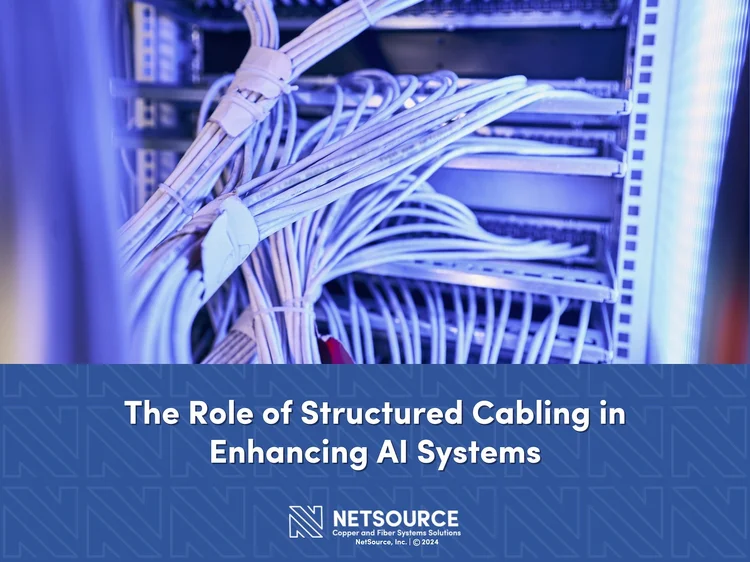
The Role of Structured Cabling in Enhancing AI Systems in the USA

The Role of Structured Cabling in Enhancing AI Systems in the USA Structured cabling forms the backbone of modern IT infrastructure crucial for ensuring data, voice, and video transmission across networks. In the era of big data and advanced computing, the role of structured cabling is becoming even more pivotal, especially with the increasing integration of artificial intelligence (AI) systems. The use of data cables and structured layouts ensures that AI systems can operate efficiently and scale as needed, addressing both current demands and future growth. At NetSource, we specialize in providing tailored structured cabling solutions that meet the dynamic needs of modern technologies and future expansions in the United States. This article delves into how structured cabling addresses both current needs and future expansions in the technological landscape. The Demand for High-Speed, Reliable Connections in AI | Cable Manufacturer in USA AI applications are reshaping the technological landscape, demanding ultra-fast and reliable connections to function optimally. At the core of this demand is the data center cabling infrastructure, which is important in managing the heavy data flows essential for AI operations. These systems thrive on low latency and high bandwidth—fundamental characteristics in data centers catering to AI and machine learning tasks. AI’s rapid evolution requires a cabling infrastructure that supports current needs and can scale to handle increased need. This necessitates investments in high-quality fiber optic solutions known for their capacity to facilitate fast data transmission over long distances without signal loss. Such robust infrastructure is vital in supporting complex AI computations and real-time data analysis across extensive networks. Types of Cables Used in AI Systems In an AI infrastructure, the collaboration between fiber optic and copper cables is essential due to their distinct characteristics and capabilities, supporting different aspects of connectivity and power management. Fiber Optic Cables Fiber optic cable manufacturers in the USA are pivotal in supplying high-quality cables that meet the high-speed demands of AI systems. These cables are essential for transmitting data at lightning speeds over long distances with minimal signal loss, crucial for complex AI computations that rely on rapid, real-time data analysis and decision-making. Using light for data transmission, fiber optic cables eliminate issues like electromagnetic interference, making them ideal for sensitive data environments. Copper Cables Copper cables play a complementary role, particularly useful for power transmission and short-distance connections such as those within server racks. They handle 25G or 50G signaling over short distances of one to two meters, which is adequate for the connections between servers and top-of-rack switches in a data center architecture. Together, fiber and copper cables create a robust and efficient network infrastructure in data centers, accommodating both the extensive data bandwidth required by AI and the practicalities of power management and physical connectivity. Enhancing AI Operations With Structured Cabling Structured cabling plays a crucial role in enhancing the scalability and reliability of AI operations. This cabling framework supports efficient data flow, which is crucial for AI’s intensive computational demands. Scalability and Reliability Structured cabling systems are inherently designed to accommodate growth and changes in network architecture without major overhauls. This adaptability is essential in AI environments where data volume and processing needs can grow. The modular nature of structured cabling allows for easy expansion and reconfiguration; ensuring that the network infrastructure can grow alongside the AI operations it supports​. Spine-and-Leaf Topologies The spine-and-leaf topology is particularly effective in data center environments involving AI tasks. This configuration minimizes latency and maximizes bandwidth, both important for the performance of AI applications. In a spine-and-leaf setup, signal cables connect leaf switches (which directly handle data to and from servers) to spine switches that route traffic across the data center. This design ensures a high degree of redundancy and fault tolerance, providing a consistent and reliable network performance necessary for AI computations. The fully meshed connections allow for very low latency and high throughput, which are essential for the rapid processing speeds required by AI systems​. Challenges and Solutions in Structured Cabling for AI Structured cabling systems face several challenges in the AI-driven data center environment. Key among these are: Data bottlenecks Power management issues The need for high-density communications cable solutions. These challenges arise as AI applications demand rapid data transmission rates and substantial power. Traditional data center cable designs struggle to provide this efficiently.   To address these challenges, data centers are increasingly turning to high-quality fiber optic cable management systems. These systems are crucial for mitigating data bottlenecks by providing the necessary bandwidth and reducing latency. This is critical for the real-time processing needs of AI applications. Organized and scalable cable infrastructure, including spine-and-leaf configurations, also plays a crucial role. This setup allows for greater flexibility and scalability in network cable design, effectively supporting the dynamic and intensive data flow requirements of AI operations. Empowering AI with Advanced Structured Cabling Solutions in the USA Structured cabling plays a critical role in enhancing and future-proofing AI systems. These technologies ensure robust, scalable network infrastructures crucial for AI’s demanding environments. At NetSource, we invite businesses to consult with us for tailored cable assembly solutions that meet the evolving demands of AI technologies.

Scroll to Top