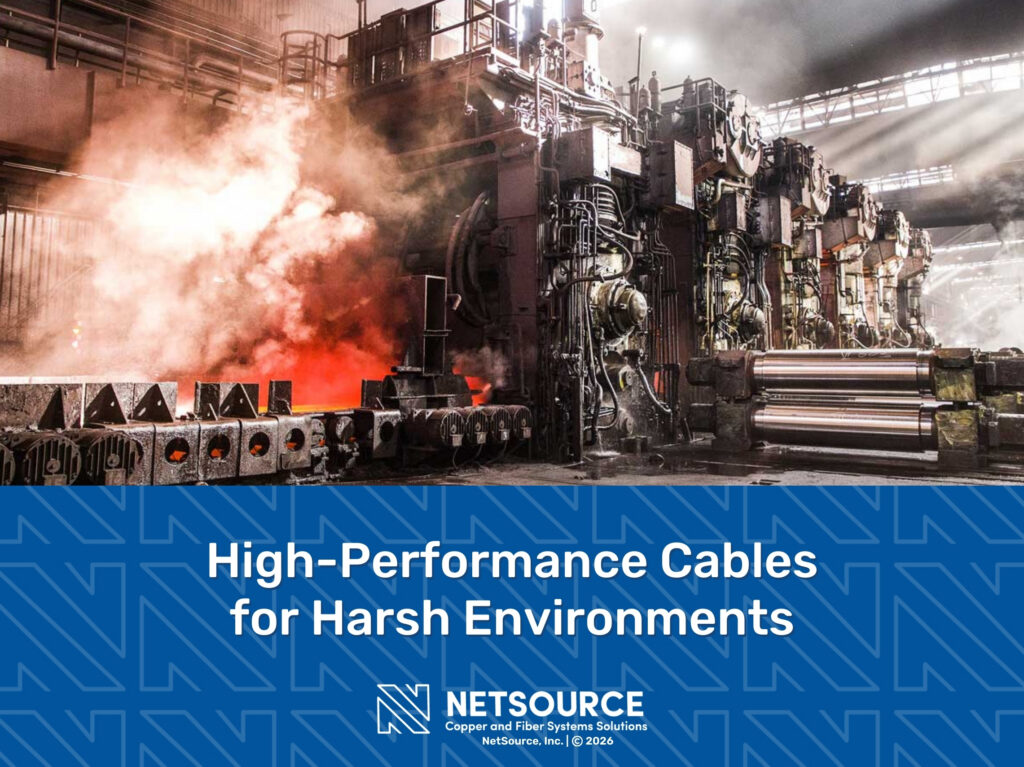
High-Performance Cables for Harsh Environments
If you need reliable cables for harsh environments, you need solutions that can handle heat, vibration, moisture, and physical stress without network failure. Industries like defense, manufacturing, transportation, and broadband rely on rugged fiber optic cables and armored fiber optic cables for stable connectivity. This guide explains why standard cables fail, when specialized designs are needed, and how custom military cable solutions support critical systems. NetSource designs and manufactures cables for harsh environments across the USA. Many industries rely on specialized connectivity solutions, such as cable assemblies for harsh environments in the USA, to ensure reliable performance in demanding conditions. Contact our team to find the right solution for your project. Why Cables for Harsh Environments Are Important Cables for harsh environments keep communication networks running where standard cables fail. Industries such as defense, industrial facilities, broadband infrastructure, and transportation rely on stable data transmission even under heat, vibration, moisture, and physical stress. Rugged fiber optic cables are built with stronger materials and protective designs to withstand these conditions. They maintain reliable performance in extreme temperatures, pressure, and outdoor environments. Because modern infrastructure depends on stable connectivity, many organizations in the USA use harsh environment cables to ensure long-term durability and uninterrupted network performance. Reliable fiber infrastructure also plays a major role in modern networks, especially when choosing the right data center cables for high-performance connectivity. Common Conditions That Require Cables for Harsh Environments Many environments place significant stress on network infrastructure. Cables for harsh environments are designed to maintain stable communication and prevent downtime in these demanding conditions. Common conditions that require harsh environment cables include: Extreme temperatures: Outdoor and industrial installations may face freezing cold or intense heat. Many outdoor deployments rely on durable outside plant fiber cables designed to withstand temperature changes and environmental stress. Moisture and chemicals: Water, oils, and corrosive substances in industrial or outdoor settings can damage standard cables. Protective coatings and sealed designs help prevent corrosion. Vibration and physical stress: Machinery, vehicles, and defense equipment create constant movement. Cables must handle bending, pulling, and vibration without signal loss. Outdoor and underground exposure: UV radiation, dust, and soil pressure can weaken standard cables. Durable materials help cables for harsh environments maintain long-term reliability. Key Design Features of Rugged Fiber Optic Cables Rugged fiber optic cables are built for reliable performance in demanding conditions. Industry guidance like the telecommunications infrastructure standards from the Telecommunications Industry Association helps define best practices for cable design and installation. Choosing the right connectors also improves reliability. Learn how to improve network uptime with the right fiber connector to strengthen overall network performance. Many deployments also use indoor-outdoor fiber cables designed to withstand changing environmental conditions. Key design features include: Durable outer jackets that protect against abrasion, chemicals, moisture, and UV exposure Armored fiber optic cables that add protection from crushing, rodent damage, and mechanical impact High tensile strength to withstand pulling forces during installation and operation Flexible cable construction that allows easy routing through equipment, conduits, and tight spaces without damaging the fiber Custom Military Cable and Defense Cable Requirements Military and defense applications require durable fiber optic systems that operate reliably in extreme conditions. These networks support communication, radar, surveillance, and vehicle systems that operate in environments with vibration, weather, and mechanical stress. Many projects rely on manufacturers with strong OEM cable design capabilities to create custom solutions. Advanced systems may also use hybrid fiber cable assemblies that combine power and data connectivity for demanding military and industrial environments. How Armored Fiber Optic Cables Improve Network Reliability Armored fiber optic cables protect network infrastructure in demanding environments. Infrastructure projects often deploy armored fiber optic trunk cables to protect network connections from crushing forces and environmental damage. Their reinforced design helps prevent damage from crushing, mechanical impact, and pressure during industrial or underground installations. The armored layer also protects cables from rodents and environmental hazards such as dust and moisture. Because of this added protection, armored fiber optic cables improve durability, reduce maintenance, and support reliable performance in industries such as telecommunications, transportation, industrial facilities, and defense systems. Choosing the Right Military Cable Manufacturer Selecting the right manufacturer is important when sourcing cables for harsh environments. Businesses need a partner that understands demanding conditions and can deliver reliable cable solutions. Working with manufacturers that provide a full range of fiber and network infrastructure products can help organizations select the right solution for demanding applications. At NetSource, we specialize in designing and manufacturing rugged cable solutions for industries that require durability and consistent performance. Key factors to consider when choosing a manufacturer include: Strong quality manufacturing standards and strict quality control Experience designing cables for harsh environments Ability to produce custom military cable and defense cables Reliable testing for durability, signal performance, and environmental resistance Fast production and dependable delivery for critical projects Working with an experienced military cable manufacturer like NetSource helps ensure your network infrastructure remains reliable even in the most demanding environments. The Importance of Reliable Cables for Harsh Environments Fiber optic systems must perform reliably where standard cables often fail. Cables for harsh environments use stronger materials and designs, such as armored fiber optic cables, to maintain stable performance. Many infrastructure projects also require Build America Buy America compliant products. At NetSource, we design rugged fiber optic cables, custom military cable solutions, and defense cables for demanding environments across the USA. Our solutions also support expanding connectivity through broadband network solutions in the USA. If your project needs reliable cables for harsh environments, contact NetSource to find the right solution.