Author name: admin

Broadband Solutions, Custom Data Cables, Wireless Networks

Broadband Solutions vs. Wireless Networks: Enhancing Accessibility Across the USA

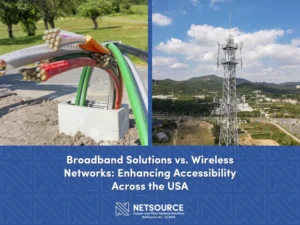
Broadband Solutions vs. Wireless Networks: Enhancing Accessibility Across the USA By 2029, 98% of Americans will have access to the Internet, reflecting a significant stride toward nationwide digital connectivity. This surge in accessibility raises important questions about the comparative reach and efficiency of broadband and wireless networks. This article examines how each contributes to bridging the digital divide in diverse American regions. We compare the roles and accessibility of broadband solutions vs. wireless networks and highlight how innovative solutions from NetSource enhance internet accessibility across the USA. Clarifying Broadband Solutions vs. Wireless Networks: Are They the Same?  When you build a digital infrastructure, understanding the distinction between broadband solutions vs. wireless networks helps you deploy effective internet services. Broadband solutions encompass various high-speed internet technologies primarily delivered through wired connections such as DSL, fiber optic, and cable. These technologies provide stable and high-capacity connections. They create the backbone for internet services and large-scale data operations. unlike broadband solutions, wireless networks utilize technologies like Wi-Fi and fixed wireless access (FWA) to provide internet access without needing physical cabling. These wireless networks offer quick deployment and flexibility in geographic areas where traditional wiring is impractical. Accessibility of Broadband Solutions in the U.S. The accessibility of broadband solutions hinges significantly on the availability of advanced cabling solutions like custom fiber optic cables. Known for its reliability and high-speed capabilities, broadband is indispensable for supporting demanding applications. In fact, cable internet is available to nearly 90% of U.S. households. It has a widespread reach and extensive infrastructure already in place. However, the deployment of broadband infrastructure requires careful planning and significant investment. This is particularly seen in less urbanized areas where laying cables can be logistically challenging and economically demanding. Accessibility of Wireless Networks  Wireless network technologies, such as 5G and Wi-Fi 6, have redefined the accessibility of internet services. This impacts regions where laying physical cables is not feasible. In comparison to broadband solutions, wireless networks offer considerable advantages in terms of scalability and ease of expansion. Service providers can extend internet access to remote and underserved areas more rapidly. However, the level of access varies. In regions with strong wireless infrastructure, users can enjoy the high-speed benefits of a 5G network. Others might only have access to LTE. These networks, while flexible, face challenges related to signal interference and bandwidth limitations, particularly in densely populated or geographically complex areas. This creates the need for a strategic approach to placing antennas and repeaters to optimize signal strength and coverage. The Difference Between Broadband and Wireless Understanding these key differences and accessibility challenges between broadband solutions and wireless networks allows you to select the best technology and strategy for deploying internet services. At NetSource, we provide the foundational components you need. We have everything from cutting-edge telecommunications cables to custom network solutions that support both broadband solutions and wireless networks. We enable both to thrive and expand their reach. Leveraging Cable Manufacturer Technology: Broadband Solutions vs. Wireless Networks  Choosing the right type of connectivity can significantly impact your operational efficiency and business growth. With broadband solutions, customers get high-speed data transmission that works for cloud computing, large-scale backups, and heavy data transactions. Whereas, wireless network solutions have slightly slower data transmission speeds but offer incredible flexibility and reduced installation times. The Role of Custom Data Cables in Connectivity Across the USA Any reliable network requires an emphasis on quality cabling. At NetSource, we understand that effective connectivity requires seamless, uninterrupted service and the ability to scale efficiently. We craft our custom fiber optic cables and broadband infrastructure to address the unique demands of diverse business environments. With our custom data cables, you can support both broadband and wireless networks. Tailored Performance: The design of our custom small cell cables enhance signal quality and reduces latency. This is important for maintaining robust connections in dense urban settings or extensive corporate campuses. Enhanced Durability: Our custom fiber optic cables utilize high-quality materials and withstand environmental challenges. They provide long-term reliability and reduce the need for frequent replacements. Scalability Solutions: Our telecommunications cables adapt as your network needs increase. Whether expanding a current setup or integrating new technologies, our cables provide the backbone for future growth. Precision Design: We meticulously tailor each cable configuration to meet specific operational requirements. With our cables, you get optimal performance across various applications, from high-speed data centers to intricate telecommunications networks. By focusing on high-quality, custom data cable solutions, we help you meet current connectivity needs while also preparing you for future needs. With NetSource cables, you’re investing in a foundation that supports expansive growth and technological evolution. Partner With NetSource for Future-Ready Connectivity in the United States At NetSource, we provide you with connectivity solutions that propel your business forward. We help with both broadband and wireless networks’ roles tailored to ensure that your connectivity infrastructure is a strategic asset. Contact us to explore how our broadband network solutions and innovative wireless setups can transform your business connectivity. We don’t just work to provide you with what you need today—we anticipate the technological demands of tomorrow.

C-Band Deployment, Broadband Expansion, Rural broadband.

USA Cable Manufacturers Drive 5G Expansion With C-Band Deployment

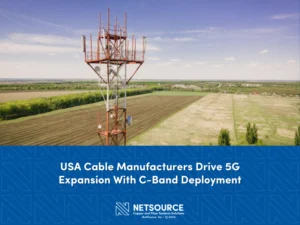
USA Cable Manufacturers Drive 5G Expansion With C-Band Deployment Over 70% of new 5G C-Band spectrum is being deployed by cable manufacturers in the USA this year. This expansion helps to enhance nationwide connectivity each and every day. At NetSource, we work hard to make sure that your infrastructure matches the technological demands. This article explains how C-Band deployment impacts 5G adoption and innovation across the United States. Bridging the Rural Digital Divide With C-Band Deployment As C-Band is used more frequently throughout the communications industry, it shines as a game changer for bridging the rural digital divide. C-Band offers a balanced blend of coverage and performance through its unique mid-band spectrum. That makes it a great option for extending 5G’s reach into rural areas. Traditionally, these areas struggled to access connectivity with the same internet opportunities. Here’s how C-Band makes a difference: Extensive Coverage: C-Band’s impressive propagation characteristics allow signals to travel longer distances and penetrate buildings more effectively than higher frequency bands. This means reliable service in rural and suburban areas, reducing the isolation felt by these communities or frustration with interrupted service. Enhanced Capacity: As your customers enjoy faster download speeds and smoother streaming, they find that C-Band also increases network capacity. This allows more users to connect simultaneously without degradation in service quality—an important factor during peak times. Reduced Costs: By utilizing C-Band, you can deploy fewer cell sites over larger areas. This significantly reduces the infrastructure costs of bringing high-speed internet to remote locations. This cost efficiency accelerates the rollout of services, ensuring that more communities benefit sooner rather than later. C-Band at Work: Cable Manufacturers in the USA Powering Business Innovation C-Band’s deployment goes beyond giving communities fast internet. It’s about enabling businesses throughout the USA to harness the full potential of 5G technologies, driving productivity and innovation. Here’s how businesses stand to benefit: Cloud Applications and IoT: With C-Band, businesses in your network area can leverage cloud technology and IoT solutions more effectively. The band’s capacity for high-speed data transfer and low latency ensures that real-time data processing and analytics can happen seamlessly. This empowers businesses to make quicker, data-driven decisions. Enhanced Communication Solutions: Multi-core fiber optic cables and advanced communication infrastructure supported by C-Band enhance the reliability and quality of business communications. This supports everything from video conferencing to large-scale data transfers between branches spread across the country. Fixed Wireless Access (FWA): C-Band communications cable has taken a prime role in FWA. It provides a cost-effective alternative to traditional wired connections, offering businesses and homes high-speed broadband without the extensive physical infrastructure. This is particularly transformative for rural businesses, where laying fiber can be prohibitively expensive and logistically challenging. Future-Proofing Connectivity With C-Band In addition to the here and now, the deployment of C-Band cable assembly infrastructures increases the expansion and enhancement of 5G technologies across the USA. Here’s how C-Band directly influences 5G adoption and sparks innovation: Enhanced Network Capacity Partnering with cable manufacturers in the USA, like NetSource, for C-Band’s deployment significantly increases network capacity and reliability. This strikes a perfect balance between coverage and speed, allowing for denser network deployments without the extensive infrastructure required by higher frequency bands. This means businesses and consumers experience fewer interruptions and higher data throughput needed for applications like real-time video streaming and large-scale IoT deployments. Driving Economic Growth As C-Band enhances network capabilities, it also opens doors to new economic opportunities. Enhanced 5G networks foster innovation in sectors like telemedicine, smart cities, and automated manufacturing, providing the backbone for these technologies to thrive. This, in turn, fuels job creation and stimulates economic activities in technology-driven sectors. Catalyzing Technological Innovation The deployment of C-Band is a catalyst for technological advancement. By providing a reliable and fast connection, it enables the development and implementation of next-generation technologies and services. Companies can leverage enhanced 5G capabilities to develop new applications and services that were not feasible under previous technology standards, driving innovation and offering new solutions to everyday challenges. Each step forward in the deployment of C-Band, using fiber optic cable manufacturers products, takes you one step further toward a more connected and technologically advanced future. By embracing C-Band’s capabilities, the USA is setting the stage for a transformative impact on technology, the economy, and everyday life. Join Us on the Journey to a Connected Future As the deployment of C-Band for 5G continues to expand across the USA, the promise of a fully connected future becomes more tangible. As one of the best cable manufacturers in the USA, NetSource plays a central role in this transformation. Join us in this journey, leveraging our expertise and innovative solutions to enhance your connectivity and readiness for the digital age. Contact us today to discover how our cable solutions can transform your projects and prepare you for the exciting possibilities that lie ahead.

Broadband Expansion, (BEAD) Broadband Equity Access and Deployment, Broadband Solutions, Build America Buy America (BABA)

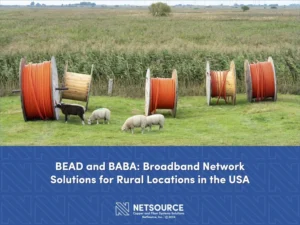
BEAD and BABA: Broadband Network Solutions for Rural Locations in the USA

BEAD and BABA: Broadband Network Solutions for Rural Locations in the USA The digital divide in the USA has significantly impacted rural communities, businesses, and educational institutions, creating a stark contrast between those with access to digital technologies and those without. NetSource’s provision of critical broadband network solutions bridge this divide. Our commitment extends through the Broadband Equity, Access, and Deployment (BEAD) program and the Build America Buy America (BABA) Act. These aim to expand high-quality internet access and foster the benefits of broadband, ensuring no community is left behind in the digital age. Key Challenges to Broadband Expansion in the USA The expansion of broadband internet across the United States faces a series of interconnected challenges that hinder progress and contribute to the persistent digital divide. These challenges include: Costly Infrastructure Deploying broadband network solutions across the United States in rural and remote areas face significant financial hurdles. This extensive cost stems from both the initial infrastructure setup and ongoing operations. Broadband providers often find it financially unappealing to extend services in areas with low population density, as the return on investment is not as immediate or significant compared to urban areas​​. Geographic Barriers The vast and often rugged terrain of the USA adds another layer of complexity to broadband expansion. Mountains, valleys, and extensive distances between rural communities pose physical and logistical challenges that complicate the laying of telecommunication cables. Such geographic hurdles increase the complexity and cost of projects, making it difficult to deliver reliable internet access to all regions​​. Technical Hurdles Choosing the right technology to serve different areas is a major technical challenge. Whether it’s fiber optic, fixed wireless, or satellite, each technology has its pros and cons depending on the area’s specifics. For instance, fiber offers high speeds and reliability but is costly and challenging to deploy in rural or hilly regions. On the other hand, technologies like fixed wireless and satellite can cover wider areas at lower costs. However, they might offer slower speeds and higher latencies​. Lack of Awareness A significant barrier to broadband expansion is the lack of awareness among consumers and businesses about the full benefits of broadband. Many are not fully informed about how business broadband solutions can improve educational opportunities, health services, and economic growth. This lack of awareness can lead to reduced demand, which in turn affects investment in broadband infrastructure​. How BEAD and BABA Address These Challenges The BEAD program and BABA Act tackle the multifaceted challenges hindering broadband expansion in the United States. They work together to provide funding, data-driven insights, and strategic guidance to bridge the digital divide. BEAD The BEAD program plays a crucial role in addressing broadband access challenges through substantial funding allocation. With $42.45 billion set aside, BEAD is instrumental in expanding high-speed internet access by focusing on infrastructure deployment, particularly in unserved and underserved areas. These efforts focus on locations that lack access to baseline service speeds, defined as less than 25/3 Mbps for unserved areas and less than 100/20 Mbps for underserved areas. This funding supports a range of activities, including planning, capacity building in state offices, and coordination with local communities​ (NTIA)​. Importantly, every BEAD-funded infrastructure project, either directly funded or indirectly influenced, is required to adhere to the BABA provisions. This means incorporating BABA mandates into all aspects of the project, from the initial terms and conditions right through to the agreements with subcontractors and secondary recipients, as mandated by federal guidelines under 2 CFR § 184.4(b). NetSource can significantly contribute to these BEAD projects by providing broadband network solutions using robust data center cables, accelerating the deployment process. With our optical telecommunications services, we ensure efficient and reliable broadband access. BABA BABA (Build America, Buy America Act): The Build America, Buy America Act is designed to prioritize the use of domestically produced materials in federally funded infrastructure projects. Unlike BEAD, which targets broadband expansion, BABA ensures that federal investments in infrastructure projects, including those related to broadband, support American manufacturing and labor by requiring the use of American-made iron, steel, manufactured products, and construction materials. This focus on domestic production supports economic growth and job creation within the United States. NetSource’s Comprehensive Broadband Network Solutions As the leading cable manufacturer in the USA, NetSource provides end-to-end broadband network solutions designed to meet the diverse needs of businesses, communities, and service providers across the United States. With a focus on quality, reliability, and innovation, NetSource’s comprehensive offerings address the complexities of modern connectivity. Broadband Network Solutions At NetSource, we pride ourselves on delivering high-quality, reliable broadband network solutions that cater to a variety of applications across different sectors. Our solutions ensure robust connectivity supporting current and future technological demands, enabling seamless digital experiences. Our broadband infrastructure provides unmatched speed and reliability, whether for commercial use, educational institutions, or healthcare facilities. Core Our core capabilities extend into critical network infrastructure,  emphasizing telecommunication cables. These components are fundamental in constructing a resilient network backbone that supports high data transmission and reduces latency. Our data center cables handle substantial data loads essential for cloud computing and large-scale virtual data storage. Meanwhile, our industrial cables ensure that voice, video, and data are transmitted efficiently and securely, making them ideal for expanding corporate and telecommunication networks. Wireless In the wireless domain, NetSource offers innovative solutions geared toward enhancing fixed wireless broadband deployment. Our wireless solutions are crafted to overcome geographical barriers and provide internet access in areas where traditional cabling is not feasible. This includes rural or remote locations where establishing physical cables is challenging and costly. By leveraging advanced wireless technologies, we extend broadband accessibility to help bridge the digital divide and foster connectivity in underserved communities. Toward a Fully Connected Tomorrow Significant progress is being made through BEAD and the BABA Act toward a more connected future in the USA. They are pivotal in extending high-speed internet to both the farthest corners and the dense urban centers of the country, envisioning a future with dismantled digital access barriers. At

AI Systems, Fiber optic cables, Structured cabling

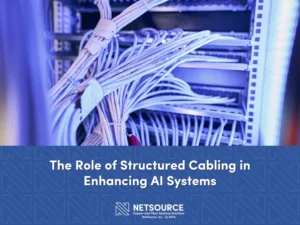
The Role of Structured Cabling in Enhancing AI Systems in the USA

The Role of Structured Cabling in Enhancing AI Systems in the USA Structured cabling forms the backbone of modern IT infrastructure crucial for ensuring data, voice, and video transmission across networks. In the era of big data and advanced computing, the role of structured cabling is becoming even more pivotal, especially with the increasing integration of artificial intelligence (AI) systems. The use of data cables and structured layouts ensures that AI systems can operate efficiently and scale as needed, addressing both current demands and future growth. At NetSource, we specialize in providing tailored structured cabling solutions that meet the dynamic needs of modern technologies and future expansions in the United States. This article delves into how structured cabling addresses both current needs and future expansions in the technological landscape. The Demand for High-Speed, Reliable Connections in AI | Cable Manufacturer in USA AI applications are reshaping the technological landscape, demanding ultra-fast and reliable connections to function optimally. At the core of this demand is the data center cabling infrastructure, which is important in managing the heavy data flows essential for AI operations. These systems thrive on low latency and high bandwidth—fundamental characteristics in data centers catering to AI and machine learning tasks. AI’s rapid evolution requires a cabling infrastructure that supports current needs and can scale to handle increased need. This necessitates investments in high-quality fiber optic solutions known for their capacity to facilitate fast data transmission over long distances without signal loss. Such robust infrastructure is vital in supporting complex AI computations and real-time data analysis across extensive networks. Types of Cables Used in AI Systems In an AI infrastructure, the collaboration between fiber optic and copper cables is essential due to their distinct characteristics and capabilities, supporting different aspects of connectivity and power management. Fiber Optic Cables Fiber optic cable manufacturers in the USA are pivotal in supplying high-quality cables that meet the high-speed demands of AI systems. These cables are essential for transmitting data at lightning speeds over long distances with minimal signal loss, crucial for complex AI computations that rely on rapid, real-time data analysis and decision-making. Using light for data transmission, fiber optic cables eliminate issues like electromagnetic interference, making them ideal for sensitive data environments. Copper Cables Copper cables play a complementary role, particularly useful for power transmission and short-distance connections such as those within server racks. They handle 25G or 50G signaling over short distances of one to two meters, which is adequate for the connections between servers and top-of-rack switches in a data center architecture. Together, fiber and copper cables create a robust and efficient network infrastructure in data centers, accommodating both the extensive data bandwidth required by AI and the practicalities of power management and physical connectivity. Enhancing AI Operations With Structured Cabling Structured cabling plays a crucial role in enhancing the scalability and reliability of AI operations. This cabling framework supports efficient data flow, which is crucial for AI’s intensive computational demands. Scalability and Reliability Structured cabling systems are inherently designed to accommodate growth and changes in network architecture without major overhauls. This adaptability is essential in AI environments where data volume and processing needs can grow. The modular nature of structured cabling allows for easy expansion and reconfiguration; ensuring that the network infrastructure can grow alongside the AI operations it supports​. Spine-and-Leaf Topologies The spine-and-leaf topology is particularly effective in data center environments involving AI tasks. This configuration minimizes latency and maximizes bandwidth, both important for the performance of AI applications. In a spine-and-leaf setup, signal cables connect leaf switches (which directly handle data to and from servers) to spine switches that route traffic across the data center. This design ensures a high degree of redundancy and fault tolerance, providing a consistent and reliable network performance necessary for AI computations. The fully meshed connections allow for very low latency and high throughput, which are essential for the rapid processing speeds required by AI systems​. Challenges and Solutions in Structured Cabling for AI Structured cabling systems face several challenges in the AI-driven data center environment. Key among these are: Data bottlenecks Power management issues The need for high-density communications cable solutions. These challenges arise as AI applications demand rapid data transmission rates and substantial power. Traditional data center cable designs struggle to provide this efficiently.   To address these challenges, data centers are increasingly turning to high-quality fiber optic cable management systems. These systems are crucial for mitigating data bottlenecks by providing the necessary bandwidth and reducing latency. This is critical for the real-time processing needs of AI applications. Organized and scalable cable infrastructure, including spine-and-leaf configurations, also plays a crucial role. This setup allows for greater flexibility and scalability in network cable design, effectively supporting the dynamic and intensive data flow requirements of AI operations. Empowering AI with Advanced Structured Cabling Solutions in the USA Structured cabling plays a critical role in enhancing and future-proofing AI systems. These technologies ensure robust, scalable network infrastructures crucial for AI’s demanding environments. At NetSource, we invite businesses to consult with us for tailored cable assembly solutions that meet the evolving demands of AI technologies.

Domestic Cable, Imported Cable

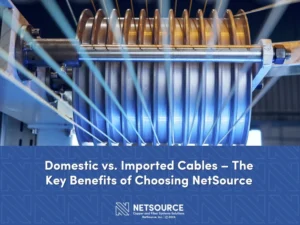
Domestic vs. Imported Cables: The Key Benefits of Choosing NetSource

Domestic vs. Imported Cables: The Key Benefits of Choosing NetSource When a business needs cable products in industries like broadband,  telecommunications, and wireless infrastructure, they have a decision to make. Should they buy from American cable manufacturers or go with less-expensive imports? Initially, imports may appear to be the better option due to lower prices. However, Netsource has the experience to tell you that ordering domestically is almost always the superior option. This article explains why American cable assembly manufacturers like NetSource are better positioned to help your company make those important purchasing decisions, especially for companies that need custom cable assemblies or connectivity solutions quickly. The Hidden Costs of Imported Cables It’s easy to see why some companies opt to import cables. The price is lower, and that can be tempting when a company wants to save money. However, imported cables often come with hidden costs that are not immediately apparent and can end up being more expensive in the long run. Quality Control Issues One of the main issues with imported cables is the lack of consistent quality control. Not all manufacturers overseas follow the same strict standards as American cable assembly manufacturers. This means that cables might not last as long or could fail more often. If you are working in telecommunications, for example, a failed-cable incident could cost more than what you saved by buying the cheaper cable. Delays in Shipping Another problem is shipping and delivery delays. Supply chain problems, like shipping container shortages or bad weather, often cause delays. These delays impact companies working on tight schedules. If you are waiting weeks or months for a critical cable assembly, it could derail an entire project. This frustrates teams and can also lead to extra costs for the business. There are also extra costs, such as import duties or changing exchange rates. These things can add up, making imported cables more expensive in the long run than they seem initially. Why NetSource Offers Better Value | Cable Assembly Manufacturers Netsource has 30 years of experience in this industry. We can guide you through the choice of producing your order domestically or relying on an import. You can utilize our expertise to guide your decision. In most cases we are encouraging customers to produce products with us domestically. Below we’ve outlined some of the major advantages in ordering domestically. Communication When you need a custom cable assembly that meets precise technical requirements, it is easier to convey your needs to a manufacturer who speaks the same language as you do. Communication breakdowns are common when dealing with an overseas manufacturer. The result could be costly mistakes. Quality One significant advantage is quality. Domestic manufacturers, like NetSource, follow strict regulations for quality control, ensuring their products are more reliable and longer-lasting. When you need cables and assemblies that won’t fail at a critical moment, NetSource can provide guidance on selecting the best products to meet your specific needs, ensuring you get the highest quality cable assemblies for your projects. Flexibility When you import cables you have less flexibility than if you were to produce those assemblies domestically. Example: you order 10,000 cables, all to a specification. They are put in a shipping container. Once those cables are in that container there is no changing the order. Compare that to placing your order domestically. At that point Netsource has the ability to be flexible and make changes to your order over time. It’s a collaboration. Change orders are common, and are perhaps one of the biggest advantages to ordering domestically. Faster Delivery Another advantage of choosing domestic manufacturers is faster turnaround and delivery times. Instead of waiting weeks—or even months—for an overseas order, American cable assembly manufacturers can deliver cable assemblies faster. NetSource is dedicated to customer satisfaction. We feature a quick turnaround time, usually ranging from 3 to 5 days. This can make a huge difference when working on a project with tight deadlines. Availability of Customization Customization is another area where American cable assembly manufacturers like NetSource excel. When your project requires custom cable assemblies, harsh environment cables, or military and aerospace cables with detailed specifications, purchasing from an overseas supplier will have limited oversight. When working with a domestic cable assembly manufacturer like NetSource, you can find assurance in the fact that you can see our modern, 85,000-square-foot facility and you will have the ability to see how your product is manufactured. Supporting the U.S. Economy and the Environment Netsource is proud to be an American company, and we know that many of our customers choose to produce domestically for that reason as well. We respect and appreciate you for that. The reasons to choose American cable manufacturers go beyond the product itself. When companies purchase domestically, they are helping the U.S. economy by providing local manufacturing, engineering, and product-testing jobs. According to the National Association of Manufacturers, every dollar spent on U.S. manufacturing adds $2.69 to the economy. This means that choosing American-made products will boost the economic opportunities available in the U.S., and the “Made in America” stamp is always looked upon favorably here in America. From an environmental standpoint, buying domestically helps reduce the carbon footprint. Overseas manufacturing facilities do not adhere to the same pollution-prevention standards as U.S. manufacturers. Additionally, shipping products over long distances can create a larger carbon footprint, so buying from local manufacturers minimizes this impact. For companies looking to become more environmentally friendly, choosing domestic manufacturing is one easy way to help keep our planet clean. Long-Term Savings and Reliability Although imported cables might seem cheaper upfront, the long-term savings of buying reliable cables is the smarter choice. At NetSource, we offer reliable, high-quality cable assemblies that do not break down or fail easily. Fewer failures mean fewer replacements and less downtime, saving money over time. Additionally, domestic manufacturers generally offer better customer support. If something goes wrong with your cables or cable assembly, getting a quick replacement or help from an American company is much

Data Center Cables, Data Center Infrastructur

Choosing the Right Data Center Cables for Your Next Upgrade

Choosing the Right Data Center Cables for Your Next Upgrade Moving, expanding, or upgrading a data center can be challenging. One of the biggest challenges is managing the complex network of data center cables. If cabling is not handled correctly, it can lead to downtime, poor performance, and unnecessary stress. This article will discuss the best practices for managing cabling during a data center move or expansion. We will also touch on the importance of choosing the right cables, labeling them correctly, and planning for future growth. At NetSource, we have been supporting businesses across the USA with these challenges for years, and we know how important it is to get it right. 1. Start With a Plan to Manage Data Center Cables Before doing anything else, you must have a solid plan for managing your data center cables. Every move or upgrade begins with assessing your current setup and determining the changes needed to support the new demands. Consider the type of cables you will use, whether they are MTP® cables for handling high data volumes or custom cable assemblies that suit your specific setup. Remember to plan for future growth, even if outside the immediate horizon. Like structured cabling, a scalable design is a smart choice because it allows for easy modifications later on. With structured cabling, everything stays organized, and you avoid the cluttered mess that could slow down operations or cause issues later. 2. Choose the Right Data Center Cables When dealing with data center cables, the cables you choose will play a significant role in your center’s performance. Communication cables are essential for data transfer and communication between systems. Still, it is not just about what cables to use—it is about matching the cables to your current and future needs. Custom cable assemblies can help you achieve a better fit for your unique setup. Working with custom cable assembly manufacturers ensures you are not left with one-size-fits-all solutions. Instead, you can get cables made specifically for your data center’s needs, improving efficiency and reducing unnecessary parts or lengths that could cause clutter. At NetSource, we have helped countless clients by providing tailored cabling solutions that perfectly fit their infrastructure. 3. Keep Cables Organized and Labeled It might seem obvious, but proper organization is paramount when managing data center cables. Poorly labeled cables can quickly become a hard-to-manage mess, especially when trying to make adjustments during a move or an expansion. If every cable looks the same and connections are unclear, you will lose valuable time trying to sort things out or make mistakes that bring down the network. To prevent these problems, label every data cable and port. Use clear, easy-to-understand labels that do not rely on technical jargon. In addition to labeling, make sure your cables are neatly bundled using cable ties, Velcro wraps, or trays. Good cable management also helps with airflow, which is crucial to prevent overheating in busy data centers. 4. Test and Validate Everything After you have installed all your data center cables, the next step is testing everything. You do not want something to go wrong to realize there is a problem. Testing ensures every cable assembly works as expected and your connections meet industry standards. At this stage, testing both copper and fiber cable assemblies is critical. Any weak spots need to be addressed before going live, saving time and money. At NetSource, we offer comprehensive testing services to ensure that every custom cable assembly meets the highest performance standards. Whether you are dealing with fiber optics or copper connections, our team can help ensure everything is ready to go. 5. Future-Proof Your Cabling Infrastructure With technology evolving so quickly, it is essential to think ahead. One of the most important parts of managing data center cables is ensuring that your system can handle future demands. For example, upgrading to MTP® cables can give you the capacity necessary for faster data transfers and higher bandwidth. Similarly, having scalable solutions allows you to grow your infrastructure without needing a complete overhaul later. Planning for the future may also involve choosing cables that meet the latest standards for speed and efficiency. Fiber optic cables are known for handling greater data loads than their copper counterparts. Ensure Success With a Solid Cabling Plan Managing data center cables during a move, expansion, or upgrade can be complex, but the right approach can make all the difference. By selecting the best cables, organizing them properly, and planning for future growth, you can ensure a seamless transition with minimal disruption to operations. At NetSource, we have the experience and products necessary to make your next project a success. From custom cable assembly to fiber optic solutions, we are ready to help you every step of the way. Reach out to NetSource and let us assist you with your next data center project.

OptiTap Cables, Access Networks and Multi-Dwelling Units (MDUs), Broadband Networks, Fiber-to-the-Building (FTTB), Fiber-to-the-Curb (FTTC):, FTTH

OptiTap® Cables: The Backbone of Modern Fiber Networks

OptiTap® Cables: The Backbone of Modern Fiber Networks Introduction As the demand for high-speed internet and reliable data transmission grows, fiber optic technology has become the preferred solution for broadband networks. OptiTap® cables, specifically designed for Fiber-to-the-Home (FTTH) and Fiber-to-the-Business (FTTB) applications, provide a quick and efficient method for deploying fiber optic connections. These cables, known for their durability and ease of installation, play a critical role in modernizing network infrastructure and expanding broadband accessibility. What Are OptiTap® Cables?  OptiTap® cables are fiber optic cable assemblies designed for rapid and secure connections in broadband networks. With over 20 years of proven technology in the field, these cables feature an SC/APC connector encapsulated in a hardened shell, ensuring durability and reliability in harsh environmental conditions. OptiTap® technology streamlines network installations and reduces labor costs while maintaining high-performance fiber optic transmission. Key Features of OptiTap® Cables Versatile Configurations:  OptiTap® cables are available in multiple configurations to support various network requirements. OptiTap® to OptiTap® cables directly connect to multiport terminals for seamless plug-and-play functionality. OptiTap® to SC, LC, or PUSHLOCK configurations allow connectivity to standard fiber distribution points. OptiTap® to blunt cables are designed for splicing or field connector termination, providing flexibility for custom installations. Depending on the configuration, these cables will either mate directly with terminals or require splicing for field termination. Weatherproof and Durable: With an IP68 rating, OptiTap® cables are protected against water and dust ingress. They are designed for outdoor applications, making them suitable for aerial, buried, or pedestal-mounted installations. High-Speed Performance: These cables offer low insertion loss and high signal integrity, ensuring seamless data transmission. They are optimized for Gigabit Passive Optical Networks (GPON) and Active Ethernet (AE) applications. Corning-Compatible Technology: NetSource provides Corning-compatible OptiTap® cable assemblies, ensuring seamless integration with existing Corning OptiTap® infrastructure. Applications of OptiTap® Cables Broadband Networks OptiTap® cables are a critical component in broadband infrastructure, enabling Internet Service Providers (ISPs) to expand fiber access for residential subscribers, businesses, and rural communities. Their durable, weather-resistant design ensures long-term reliability in aerial, buried, and pedestal-mounted installations. Rural Broadband Expansion: As part of efforts to bridge the digital divide, ISPs use OptiTap® cables to extend fiber connectivity to underserved rural communities. Their weatherproof construction withstands harsh conditions, ensuring long-term network performance and reduced maintenance costs in remote locations. Fiber-to-the-Building (FTTB): Used in commercial buildings and multi-tenant complexes, OptiTap® cables provide dedicated fiber connections that enhance network stability, bandwidth capacity, and scalability. These cables connect to outdoor distribution points before transitioning to indoor fiber distribution panels or ONTs for service delivery within the building. Fiber-to-the-Curb (FTTC): OptiTap® cables extend fiber to a distribution point near the subscriber’s location, typically in a pedestal, handhole, or small enclosure. From there, fiber is extended to the premises as part of an FTTH transition, ensuring high-speed connectivity. Their environmental durability ensures long-lasting performance while enabling a seamless fiber path to the home. Fiber-to-the-Home (FTTH): OptiTap® cables terminate at a Network Interface Device (NID) on the subscriber’s premises, typically mounted on an exterior wall or placed in a pedestal or handhole. From the NID, fiber enters the building and connects to an Optical Network Terminal (ONT) or indoor fiber distribution panel, ensuring seamless high-speed broadband access. Outdoor and Harsh Environments Designed for use in outdoor enclosures, pedestals, and aerial or buried applications where quick and reliable fiber connections are needed. 5G and Small Cell Deployments Provides high-speed, low-latency fiber connectivity for small cell sites and 5G backhaul, supporting next-generation wireless networks. Utility and Smart Grid Networks Enables secure and durable fiber connections for power utilities, transportation systems, and smart grid applications. Access Networks and Multi-Dwelling Units (MDUs) OptiTap® cables serve as the backbone for connecting MDUs to the broader fiber network. These cables interface with multiport terminals outside the building, providing high-speed connectivity to fiber distribution hubs (FDHs) or patch panels within the MDU. While OptiTap® connectors streamline deployment, indoor-rated fiber patch panels or FDHs are typically used inside the MDU for structured cabling solutions. Multiport terminals allow for easy scalability, enabling seamless future network expansions. Benefits of OptiTap® Cables Faster Deployment Traditional fiber optic installations often involve extensive splicing and labor-intensive processes. OptiTap® cables, when pre-terminated, feature a plug-and-play design that significantly reduces installation time and simplifies network expansion. By minimizing field splicing, these cables help ISPs accelerate broadband deployments while ensuring reliable connectivity. Cost Savings OptiTap® assemblies help reduce overall deployment costs by minimizing labor and equipment expenses associated with traditional fiber installations. Pre-Terminated OptiTap® Assemblies: These plug-and-play solutions eliminate the need for fusion splicing in the field, reducing reliance on expensive splicing equipment and highly skilled technicians. Faster installations translate to lower labor costs, shorter project timelines, and increased service activation rates for ISPs. Stubbed  OptiTap® Assemblies: While some deployments require field splicing, OptiTap® cables still reduce material waste and streamline installation compared to fully custom-built fiber runs. Pre-cut lengths and factory-polished connectors reduce on-site errors and rework, leading to cost-effective scalability in broadband rollouts. Reducing equipment costs, labor requirements, and installation time, OptiTap® assemblies offer a more efficient and cost-effective solution for fiber network expansion. Enhanced Reliability Factory-terminated connectors minimize insertion loss and improve network stability. The rugged construction of OptiTap® cables ensures long-term durability. Scalability and Flexibility As broadband demands increase, OptiTap® networks can be easily expanded by adding multiport terminals and additional drop cables. This modularity ensures future-proof network infrastructure. Minimal Maintenance With high resistance to environmental factors, OptiTap® cables require minimal maintenance compared to traditional fiber optic installations. How OptiTap® Cables Improve FTTH and Broadband Networks Simplifying Installations OptiTap® cables provide faster, more efficient fiber deployments by reducing the need for extensive field splicing. Pre-terminated options allow technicians to simply plug in the connectors, eliminating time-consuming splicing and fiber preparation. For configurations requiring splicing, factory-prepared cables reduce errors and simplify on-site termination, ensuring consistent and reliable installations. Enhancing Network Performance Designed for low-loss optical transmission, OptiTap® cables ensure minimal signal degradation over long distances. This makes them ideal for high-bandwidth applications, including video streaming,

AI Systems, Data Center Infrastructur, Fiber Infrastructure

What AI Means for Data Center Infrastructure: Why Fiber Matters More Than Ever

What AI Means for Data Center Infrastructure: Why Fiber Matters More Than Ever AI is ubiquitous. If you’ve glanced at the news or skimmed a conference agenda, it’s the headline and footnote. But for the people responsible for building and maintaining real infrastructure, AI isn’t an idea. It’s a set of pressures. At NetSource, we’ve been listening closely to the teams tasked with keeping ports lit, racks breathable, and upgrade paths open. Heavier workloads. Hotter racks. Denser port counts. And nonstop traffic between machines that now need to think faster, not just communicate. It’s not just about computation. AI’s real footprint lands in power, cooling, and physical pathways. This is the cabling infrastructure that ties everything together. Clients aren’t asking about AI roadmaps. They’re asking how to keep ports lit, racks breathable, and upgrade paths open. Real change is happening inside the walls and ceilings of data centers under expansion. AI Doesn’t Float in the Cloud. It Bottlenecks in the Rack   AI doesn’t just “run in the cloud.” It runs on silicon that lives in buildings full of cables. Generative AI, inference clusters, and training workloads have brought a new heat to the network layer. More GPUs mean more east-west traffic. More east-west traffic means higher aggregate bandwidth and efficient links. This isn’t theoretical. Hyperscale sites are already shifting toward architectures that prioritize: Low-loss optical backbones High-density fiber trunks Greater port accessibility and modular cabling Even mid-market deployments are starting to mirror these concerns. The issue is no longer about peak speed. It’s about stackable, supportable, sustainable throughput that doesn’t eat up floor space or air capacity. Consider a typical AI refresh cycle for a regional co-location facility. New racks arrive with high-density GPU chassis that double east-west bandwidth needs overnight. Suddenly, what was a “well-designed” copper/fiber hybrid is now a liability. Patch fields are crowded, link budgets are fragile, and lead times on pre-terminated fiber trunks can’t keep up. These moments drive infrastructure leaders to rethink not just what they install, but how they plan for what’s next. It’s worth noting that the same challenges are creeping into enterprise deployments as well. As organizations adopt smaller-scale AI models, they’re discovering that their network layers weren’t designed for the volume of east-west traffic those models generate. Bandwidth demand isn’t just peaking. It’s pulsing in unpredictable cycles, putting strain on cable trays, switching fabric, and power distribution alike. Improve Network Uptime With the Right Fiber Connector Why Fiber Isn’t Just “Faster.” It’s Smarter Infrastructure Speed is only part of the story. The move to fiber in AI-sensitive environments is driven by a combination of physical and operational realities: Space efficiency: High-density MTP/MPO connectors reduce cable volume, free up airflow paths, and support easier access. Thermal performance: Fiber generates less heat and reduces airflow resistance. This is a key consideration in AI-accelerated zones where cooling is already maxed. EMI immunity: Fiber avoids the signal degradation and interference issues common in copper-heavy trays. Upgrade flexibility: Modular panel systems and scalable trunk designs simplify transitions from 10G to 40G to 100G and beyond. Fiber doesn’t just deliver performance. It extends the lifespan and modularity of the environment it lives in. Unlike copper, fiber doesn’t punish you later when density increases or roles shift. Teams who have made the switch to fiber-first architectures often report improved visibility, faster moves/adds/changes, and fewer post-deployment surprises. Fiber provides a cleaner baseline for evolution. Designing for What’s Coming, Not Just What’s Here Data centers rarely fail because of today’s traffic. They fail because of tomorrow’s expectations. Designing with fiber-first principles gives infrastructure teams breathing room. It allows planning for: Uncertain growth trajectories Shorter deployment windows Hybrid workloads with volatile bandwidth requirements A mid-sized enterprise data center begins onboarding AI-enhanced video analytics platforms. The team doesn’t yet know how aggressively the workload will scale, but wants to avoid disruptive retrofits later. By shifting to a modular fiber architecture—with scalable trunks, labeled patch frames, and built-in slack capacity—they future-proof their space with minimal upfront cost. This is exactly the kind of planning NetSource supports. Our teams collaborate with integrators, contractors, and IT stakeholders to develop made-to-order fiber systems that match specific topology, timing, and termination preferences. And because everything is built and assembled in the U.S., timelines are predictable.   We see a growing number of clients using this moment to clean up legacy chaos. Moving from patchwork cabling to modular fiber systems reduces the risk of costly outages, speeds up troubleshooting, and makes it easier to train new team members on layout logic. When AI-driven platforms demand uptime, those day-to-day operational gains matter more than ever. What Fiber Enables in AI Deployments Fiber infrastructure doesn’t just “handle” AI. It enables it by making data center networks: Easier to cool Simpler to scale More resilient under load Quicker to reconfigure Cleaner to manage over time It turns a reactive scramble into a manageable system. That system becomes the backbone of innovation. Don’t Build for the Buzz. Build for the Load. AI brings infrastructure stress. Fiber isn’t a futureproofing gimmick. It’s a practical response to the way networks are evolving. If you’re architecting systems that need to grow, flex, and perform under pressure, fiber deserves more than a line item. It deserves a conversation. And if you’re looking for that conversation, we’re ready when you are.

Feature_A close-up shot reveals a network server rack densely packed with teal fiber optic cables neatly organized and connected to various ports.
Patch Panel, Modern Networks

Why Patch Panels Are Still Critical to Modern Networks

When building or upgrading modern networks, it’s easy to get caught up in headline technologies: 10G switches, fiber trunk cables, AI-ready infrastructure. One of the most essential components remains the humble patch panel. At NetSource, we manufacture and support a wide range of fiber patch panel options because, despite their low profile, they serve as a critical backbone for connectivity and future growth. The Function of a Patch Panel A fiber patch panel is a passive device that organizes and routes fiber optic cables. It allows technicians to connect incoming and outgoing lines without disrupting active service. In practice, this means faster troubleshooting, cleaner cable management, and far less risk of network downtime during moves, adds, or changes. This organizational role becomes even more important in high-density or mission-critical environments. Hyperscale data centers, for example, may need to manage thousands of fiber connections. A rack-mounted patch panel system ensures that each connection is labeled, accessible, and scalable. Modern Networks, Same Challenges Fiber technology has advanced rapidly—but cable management challenges haven’t disappeared. In fact, they’ve become more complex. Today’s installations often include: Mixed media (fiber + copper) Varied connector types (LC, MPO/MTP®, SC) Dense equipment bays with limited access A well-structured patch panel acts as a control point. It enables flexible port allocation, staged rollouts, and rapid equipment swaps—all without disturbing adjacent lines. This modularity is key to future-proofing any large-scale installation. Why Patch Panels Still Matter The need for organization and clarity only increases as modern networks scale. 1. Operational Efficiency Technicians can isolate and address issues without pulling or rerouting active cables. In high-pressure environments, that means lower risk and faster resolution. 2. Scalability Patch panels enable scaling in stages. New lines can be added cleanly without reworking the entire cabinet. This is crucial for hyperscale and enterprise facilities planning for rapid growth. 3. Structured Cabling Compliance Standards such as TIA-568 require organized cabling. Patch panels not only support compliance—they often determine whether a site passes inspection. How Patch Panels Evolve With Tech Patch panels may not make headlines, but they’ve kept pace with modern infrastructure. High-density units now support MTP®/MPO connectors, ribbon fiber, and speeds of 40G, 100G, or higher—without compromising on clarity or control. They allow infrastructure managers to maintain order even as data throughput accelerates. Hybrid environments that mix copper and fiber also benefit from updated panel designs. Angled and flat configurations support airflow and port accessibility, especially in crowded racks. These advancements keep patch panels relevant—not as legacy gear, but as future-ready infrastructure tools. Choosing the Right Patch Panel When selecting a fiber patch panel, decision makers need to evaluate the following: Connector types — LC, SC, MPO/MTP®: What are you standardizing on? Rack compatibility — 1U, 2U, or wall-mount? Fit matters for airflow and accessibility. Density requirements — How many ports do you need today, and how will that grow? Environment — Indoor cabinet, outdoor enclosure, or specialized housing? Panel design — Angled or flat for space and airflow? Color coding — Is it necessary for multi-tenant sites or facility zones? NetSource offers solutions for all of the above. From rack-mounted, high-density panels to rugged outdoor enclosures, our assemblies are built to specifications and backed by quick turnarounds. Supporting Tools and Add-Ons Patch panels don’t operate alone. Fiber cassettes, cable organizers, adapters, and blank plates contribute to an efficient layout. These accessories not only reduce strain and improve airflow, but they also protect the investment. Modular cassettes simplify installation and speed up MAC (Moves, Adds, Changes) work. Technicians spend less time on site and make fewer errors. NetSource offers a complete ecosystem of patching hardware to support performance, compliance, and technician ease of use. These are the same accessory standards trusted by data contractors and broadband providers across the U.S. in modern networks. Procurement & Customization Considerations Beyond selection, procurement strategy matters. Choosing the right vendor can mean the difference between a smooth rollout and supply headaches. NetSource supports a wide range of made-to-spec panel configurations—including labeling, color-coding, and pre-terminated assemblies. These enhancements reduce labor time and support faster deployment. For projects with aggressive timelines, our U.S.-based manufacturing means shorter lead times and more responsive communication—especially for enterprise or contractor clients managing multi-site builds. Real-World Impact While many of NetSource’s clients rely on patch panels for high-density environments, specific case studies remain confidential. However, patterns across deployments show measurable improvements in technician efficiency, shorter installation times, and reduced service disruptions when structured cabling systems are used correctly. Final Thoughts Even as networking trends evolve, the fundamentals remain the same. Organization and scalability matter for modern networks. And clean patching can make or break your infrastructure’s long-term reliability. NetSource is proud to help design and deliver fiber patch panel solutions tailored to the realities of modern network connectivity. If your team is planning a build or expansion, we’d love to be part of the conversation. Contact us or call 1-800-557-8818 to speak with a solutions expert.

MPO/MTP® connectors, Hyperscale

The Evolution of MPO/MTP Connectivity in Hyperscale Environments

In large-scale data centers, scale isn’t nice-to-have; it’s the starting point. As networks expand to support AI workloads and edge computing, traditional duplex cabling starts to fall short. That’s where MPO/MTP® connectors stand out: high-density, multi-fiber formats that help teams deploy faster using less space. MPO/MTP® aren’t new. Engineers have relied on them for years to simplify routing and keep fiber systems modular. What’s changed is the scale, and these connectors are essential for meeting capacity and speed requirements. MPO/MTP® became the standard in hyperscale deployments and how they enable teams to build smarter fiber backbones.   What Are MPO/MTP® Connectors?   MPO stands for “multi-fiber push-on.” It’s a type of connector that can house 8, 12, 24, or even 48 fibers in a single plug, vastly reducing the bulk associated with traditional connectors like LC or SC. MTP®, or “mechanical transfer push-on,” is a higher-performance variant of MPO. Developed as a proprietary design, it features tighter tolerances, a removable housing, and optimized alignment for reduced insertion loss. Both are designed for density and speed. In one click, a technician can terminate dozens of fibers, rather than manually splicing or aligning each one. Thus an advantage in a hyperscale environments where thousands of terminations are required. Why Hyperscale Demands This Shift At hyperscale, the math changes. Reducing the footprint of patch panels, minimizing congestion in ducts and trays, and accelerating install times aren’t luxuries. They’re requirements for staying on schedule and under budget. A few drivers behind MPO/MTP® adoption at this level: Density-per-U advantage: Standard LC panels cap out quickly. MPO-based cassettes make it easy to scale—12, 24, or even 48 fibers can fit into the same footprint Faster installation: MPO/MTP® patch cables and trunks arrive pre-terminated. Crews can plug in and move on—no polishing, splicing, or prep work required Modular migration: Upgrading from 10G to 40G or 100G? MPO/MTP® makes it easy to reuse trunks; simply swap out the correct cassette or breakout Hyperscale operators don’t just want these advantages—they’ve started to expect them. Structured Cabling Impacts MPO/MTP® adoption doesn’t just change connector choice. It affects the topology of your structured cabling system. Fiber Cassettes: These devices convert MPO/MTP® trunk lines into LC breakouts for switch and server access. They’re essential for managing polarity, pinout, and connection clarity. Breakout Harnesses: Take one MPO/MTP® and fan it out to multiple LC connections. Great for patch panels, active equipment, or when space is tight. High-Density Trunks: Ribbon-style or micro-distribution MPO/MTP® trunks help reduce bundle diameter, improve airflow, and simplify routing in congested trays or overhead racks. A well-planned MPO/MTP® deployment also reduces rework. Future capacity upgrades don’t require ripping out trays or running new cable. Upgrades are as simple as swapping out a cassette, patch cord, or transceiver, with no need to rerun cable. Avoiding Common Pitfalls With MPO/MTP® Deployment Deploying MPO/MTP® infrastructure isn’t without its quirks. Some key considerations: Polarity Confusion: Type A, B, and C polarity options exist. Mismatching trunk cables and cassettes can result in signal loss. Stick to a documented polarity scheme from day one. Gender Mismatches: MPO/MTP® connectors are available in both pinned (male) and unpinned (female) formats. Using the wrong mix will leave connections unmateable or unstable. Testing Complexity: MPO/MTP® links require multi-fiber inspection and specialized testers. Ensure that your contractors have the proper tools and training to validate performance. Good planning and better documentation can save hours during install, and years of headaches during moves, adds, and changes. How NetSource Supports MPO-Driven Builds NetSource works with contractors, engineers, and hyperscale clients across the U.S. to deliver MPO/MTP® infrastructure that’s spec-ready and deployment-efficient. Whether you’re sourcing custom-length MPO/MTP® patch cables, high-density cassettes, or rackmount enclosures with optimized airflow, our team delivers engineered solutions without overcomplication. We understand that timelines are tight and rackspace is expensive. MPO/MTP® product lines are designed to minimize lead times and maximize flexibility, with no fluff and no forced bundles. Implement a Fiber Strategy MPO/MTP® adoption isn’t a trend. It’s a response to a physical bottleneck that traditional fiber infrastructure can’t solve. As hyperscale facilities expand, the demand for efficient, high-density connectivity will continue to grow. NetSource can help you stay ahead of the curve with a fiber strategy built for scale. Our team is here to walk you through fiber counts, cassette configs, and polarity planning. Contact us for your fiber strategy needs.

Scroll to Top